
Section 1: The Historical Genesis and Biogeography of Yala National Park
Spanning an astonishing 978 square kilometers (378 square miles) across the Southern and Uva Provinces of Sri Lanka, Yala National Park — historically designated as Ruhuna National Park under the British colonial administration in 1938 — stands as the crown jewel of South Asia's protected wilderness networks. Bordered by the azure waters of the Indian Ocean to the south and east, the sacred boundary of the Kumbukkan Oya river to the northeast, and the meandering Menik Ganga (Gem River) through its southwestern heartland, Yala constitutes a living sanctuary where deep evolutionary history and ancient human civilizations are inextricably intertwined.
The landscape is not merely a wilderness; it is a sacred cultural and ecological tapestry. Over two thousand years ago, during the zenith of the ancient Kingdom of Ruhuna, this very region supported thriving monastic settlements, royal agricultural hydraulic networks, and fortified trading settlements. Monks and hermits sought spiritual enlightenment in the secluded granite caves of Sithulpawwa (*Cithala Pabbatha* — "The Hill of the Quiet Mind"), an ancient rock monastery established in the 2nd century BCE by King Kavantissa. Today, the white stupa of Sithulpawwa still perches majestically atop a sheer granite pinnacle 400 feet above the forest canopy, surrounded by thousands of wild leopards, elephants, and sloth bears that roam the very paths once walked by ancient arhats.
Geologically, Yala rests upon the Highland Complex and Vijayan Complex of Sri Lanka's Pre-Cambrian crystalline basement rock. Over hundreds of millions of years, relentless monsoon winds and seasonal flash floods eroded the softer metamorphic layers, leaving behind monumental inselbergs — colossal dome-shaped rock monoliths composed of hornblende-biotite gneiss and charnockite. These inselbergs, including Patanangala, Kotadumuwehera, Jamburagala, Gonagala, and Elephant Rock, form the dramatic architectural spine of the park. They function as critical micro-habitats: absorbing solar radiation during the day to provide warm thermal beds for leopards at dawn, trapping rainwater in natural rock cisterns (*kemas*) that sustain wildlife through grueling droughts, and providing impenetrable cave systems where mother leopards nurse their newborn cubs away from ground predators.
The park is administratively divided into five distinct operational blocks: 1. **Block 1 (Ruhuna Sector - 141 sq km):** The most famous and biologically dense sector of Yala. Flanked by the Menik Ganga and the ocean, Block 1 contains a rich network of brackish lagoons (Buthawa, Uraniya, Pilinnawa), freshwater tanks, and dense scrubland supporting the highest density of leopards on earth. 2. **Block 2 (107 sq km):** Extending east from the Menik Ganga to the Kumbukkan Oya, Block 2 is a roadless, pristine coastal wilderness accessible only via seasonal river fords, harboring wild water buffalo herds and nesting marine turtles. 3. **Block 3 (407 sq km):** A vast expanse of dense, towering monsoon dry evergreen forest north of the Menik Ganga, home to secretive leopard populations and ancient irrigation reservoirs. 4. **Block 4 (264 sq km):** The wildest and least disturbed sector, featuring rugged granitic hills and dense canopies that serve as an undisturbed breeding refuge for big cats and Asian elephants. 5. **Block 5 (Galge Sector - 66 sq km):** Situated along the Buttala-Kataragama road, Block 5 features majestic riverine gallery forests along the Menik Ganga, cool shady roads, and extraordinary sloth bear encounter rates during the Palu fruiting season.
Section 2: The Evolutionary Odyssey and Functional Morphology of Panthera pardus kotiya
The Sri Lankan leopard (*Panthera pardus kotiya*) represents one of the most remarkable evolutionary phenomena in mammalian carnivore biology. Formally described by renowned Sri Lankan paleontologist Dr. P.E.P. Deraniyagala in 1956, *kotiya* is one of only nine recognized subspecies of *Panthera pardus* surviving on Earth. However, unlike its African (*P. p. pardus*), Indian (*P. p. fusca*), or Javan (*P. p. melas*) relatives, the Sri Lankan leopard occupies a unique ecological throne: it is the sole and undisputed apex mammalian predator on the entire island.
In continental Africa and India, leopards share their territories with larger, dominant carnivores such as lions (*Panthera leo*), Bengal tigers (*Panthera tigris*), and spotted hyenas (*Crocuta crocuta*). To survive in these competitive guild environments, continental leopards evolved extreme behavioral caution, strict nocturnality, and the habitual necessity of hauling their heavy kills 30 feet into the forks of acacia trees to prevent scavengers from stealing their food.
When the ancestors of the Sri Lankan leopard crossed the land bridge across the Palk Strait during the Pleistocene glacial epochs when sea levels plummeted, they encountered an island devoid of lions, tigers, wild dogs (*dholes*), and hyenas. With no larger carnivores to contest their kills or threaten their offspring, *Panthera pardus kotiya* underwent profound evolutionary changes over hundreds of thousands of years:
2. Cranial Architecture and Bite Force Mechanics The skull of *Panthera pardus kotiya* exhibits a pronounced, elevated sagittal crest and wide zygomatic arches. These skeletal features provide massive surface area for the attachment of the *temporalis* and *masseter* muscles — the primary jaw-closing muscles. As a result, the Sri Lankan leopard possesses an astonishing crushing bite force estimated at over 310 pounds per square inch (PSI), enabling it to instantly crush the cervical vertebrae and sever the spinal cord of prey with a single precision bite to the back of the neck.
3. Diurnal Confidence and Terrestrial Feeding Because there are no lions or hyenas to steal their hard-earned prey, Yala's leopards have abandoned the exhausting requirement of hauling every kill into trees. Over 85% of leopard kills documented by field researchers in Yala are consumed directly on the ground, often tucked into the shaded understory of a thorny *Carissa carandas* thicket or beneath the overhang of a granite boulder. Furthermore, they exhibit extraordinary daytime confidence, walking boldly along sandy tracks in broad daylight, lounging atop sunlit boulders, and hunting during both morning and afternoon hours.
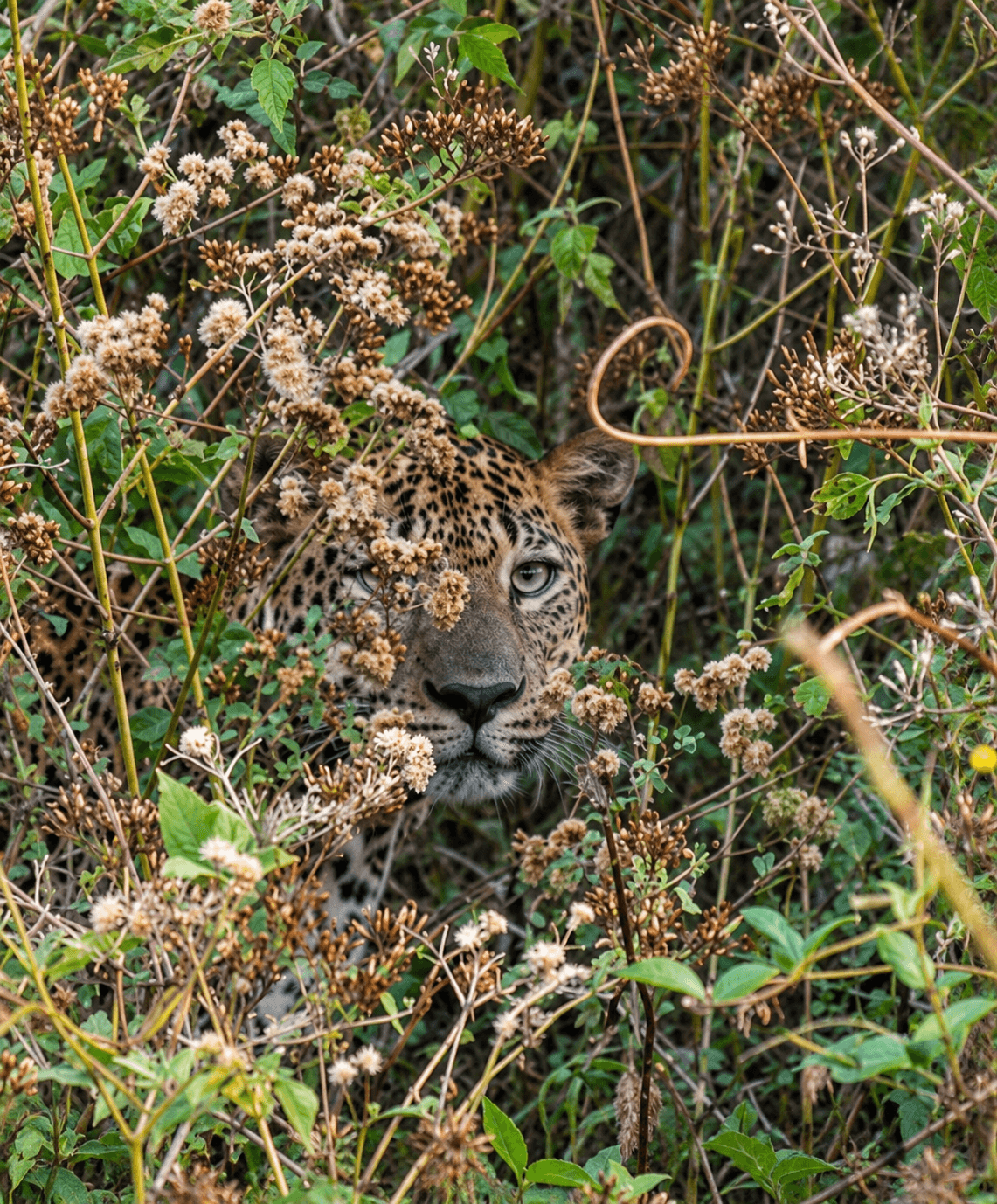
4. Pelage Rosette Pattern and Camouflage Physics The coat of *Panthera pardus kotiya* is an optical masterpiece of disruptive coloration. The background coat varies from a lustrous golden-tawny to a deep ochre-bronze, peppered with smaller, tighter, closely spaced black rosettes without central spots. In the dappled sunlight beneath thorny dry scrub, this intricate rosette geometry breaks up the cat's physical outline completely, rendering a 75-kilogram predator virtually invisible to grazing deer even at a distance of five meters.
Section 3: The Master Tracker’s Diary: 12 Hours of High-Stakes Field Tracking
Field tracking in Yala is not an act of casual driving; it is a rigorous science of sensory interpretation, bioacoustics, spoor analysis, and micro-climate evaluation. Below is an authentic, unedited transcript from our head naturalist's field tracking journal during a full-day expedition inside Block 1.
05:15 AM – 06:00 AM: The Pre-Dawn Marshalling at Palatupana Gate The cool sea breeze carries a salty tang mixed with the scent of dew-laden wild jasmine (*Jasminum angustifolium*). We arrive at the Palatupana entrance gate while the sky is still a deep indigo tapestry studded with fading stars. The queue of custom 4x4 Land Cruisers idles quietly. Our naturalist inspects our tire pressures: reducing pressure to 24 PSI provides maximum traction over deep sandy tracks and absorbs trail vibrations for our heavy telephoto lenses. At 05:45 AM, Department of Wildlife Conservation (DWC) rangers verify our electronic permits. As the horizon turns crimson, the park gate swings open, and our expedition officially begins.
06:00 AM – 07:30 AM: Reading the Sand on the Coastal Loop We bypass the crowded main thoroughfare and turn south toward the coastal lagoons of Buthawa and Uraniya. The rising sun casts long, dramatic golden rays across the scrub. On the pristine red sand, our tracker spots the day's first clue: fresh pugmarks. - **Pugmark Analysis:** The track measures 9.2 centimeters in length with four distinct toe pads, no claw marks (felines retract their claws while walking), and a three-lobed main plantar pad. The sand displaced at the outer edge is still damp and crumbly, indicating the print was made within the last 15 minutes. The stride length of 62 centimeters suggests a large adult male walking at a confident, relaxed patrol pace heading northeast toward Padikema.
07:30 AM – 09:45 AM: The Stand-Off at Padikema Rock As our vehicle coasts quietly near the base of Padikema Rock, the jungle's acoustic radar ignites. A troop of Tufted Grey Langurs (*Semnopithecus priam*) roosting in a tall *Palu* tree explodes into a chorus of frantic, guttural alarm chitters (*"Hark-hark-hark!"*). Simultaneously, a spotted deer buck lets out a piercing, metallic bark (*"Dhank!"*). Our tracker cuts the engine instantly. Complete silence descends, save for the rhythmic drumming of our own hearts. Thirty seconds later, the scrub parts. Emerging silently onto the pale granite slab is the "Padikema Alpha Male." He is a magnificent seven-year-old specimen, his coat glowing like burnished gold in the morning sun. He walks with regal indifference, sits upon the highest crest of the rock, and surveys the grassy plains below. Through our 600mm lenses, we capture every whisker, the faint dew drops glistening on his brow, and the intense, hypnotic amber fire of his eyes. For twenty-two minutes, he grants us an audience before disappearing into the deep cleft of a rock cavern.
09:45 AM – 12:30 PM: The Midday Transition & Sloth Bear Tracking As ambient temperatures rise toward 34°C, big cats seek refuge in cool rock crevices. We transition our focus to Yala's insectivorous marvel: the Sri Lankan sloth bear (*Melursus ursinus inornatus*). Near the Meda Para clearing, our tracker notices freshly excavated red soil at the base of a massive termite mound. We slow down to a crawl. Emerging from a nearby thicket of *Weera* bushes is a mother sloth bear carrying two shaggy cubs clinging tightly to her back fur. She approaches the termite mound, rears onto her hind legs, and swings her four-inch ivory claws with bone-crushing force, tearing through the rock-hard clay mound in seconds. She places her flexible, funnel-shaped lips directly against the exposed galleries and begins vacuuming up hundreds of termites with a loud, rhythmic suction sound that echoes 60 meters through the forest.
12:30 PM – 02:30 PM: Midday Respite by the Menik Ganga By midday, park regulations mandate that safari vehicles rest at designated riverbank locations along the Menik Ganga, such as Patanangala Beach or the Manik Ganga crossing. Beneath the cooling shade of colossal *Terminalia arjuna* (Kumbuk) trees, guests enjoy an authentic Sri Lankan gourmet lunch of spiced rice, roasted vegetables, devilled fresh catch, and chilled king coconut water. Troops of langurs groom each other in the branches overhead, while White-bellied Sea Eagles soar effortlessly against the deep blue sky.
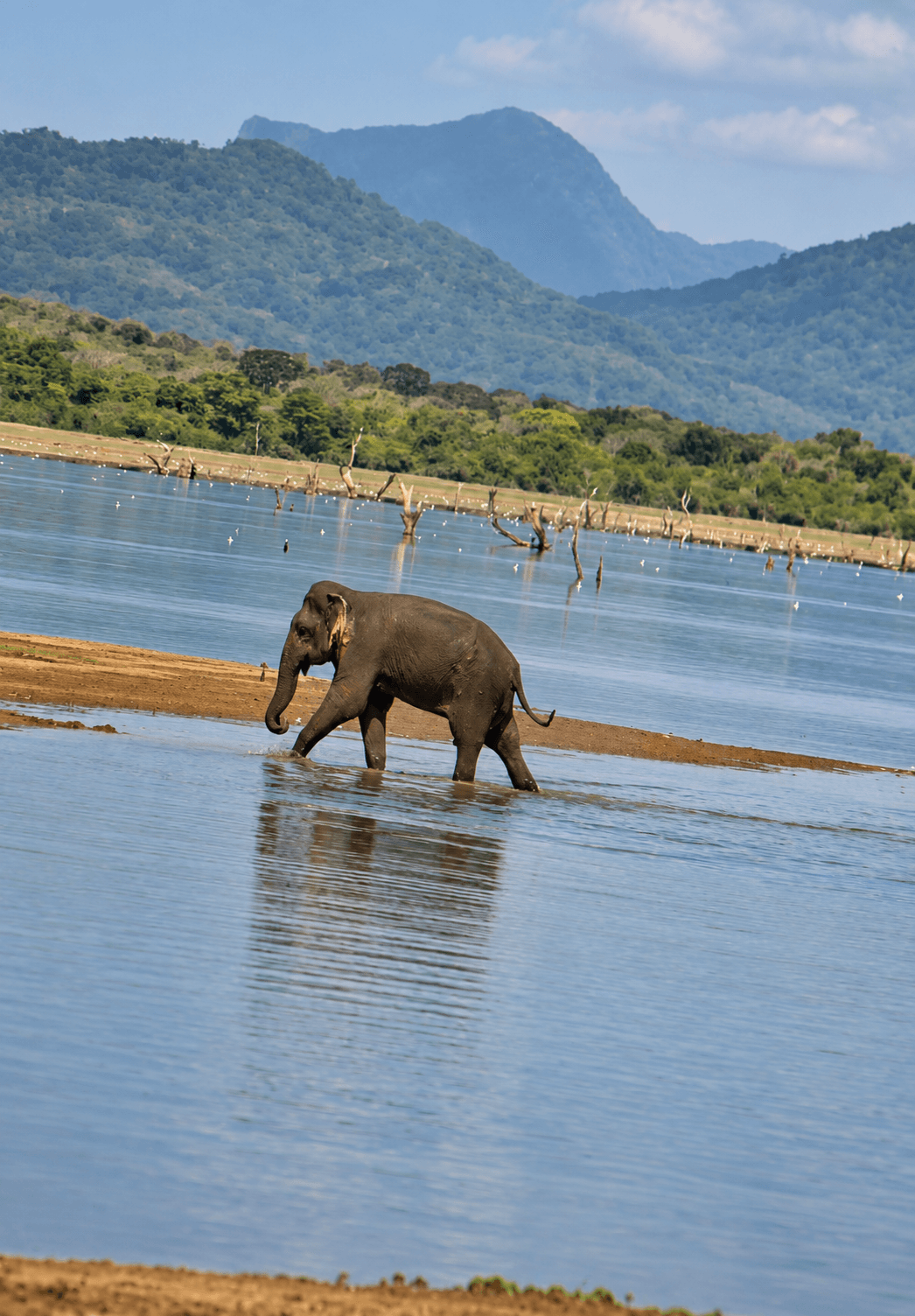
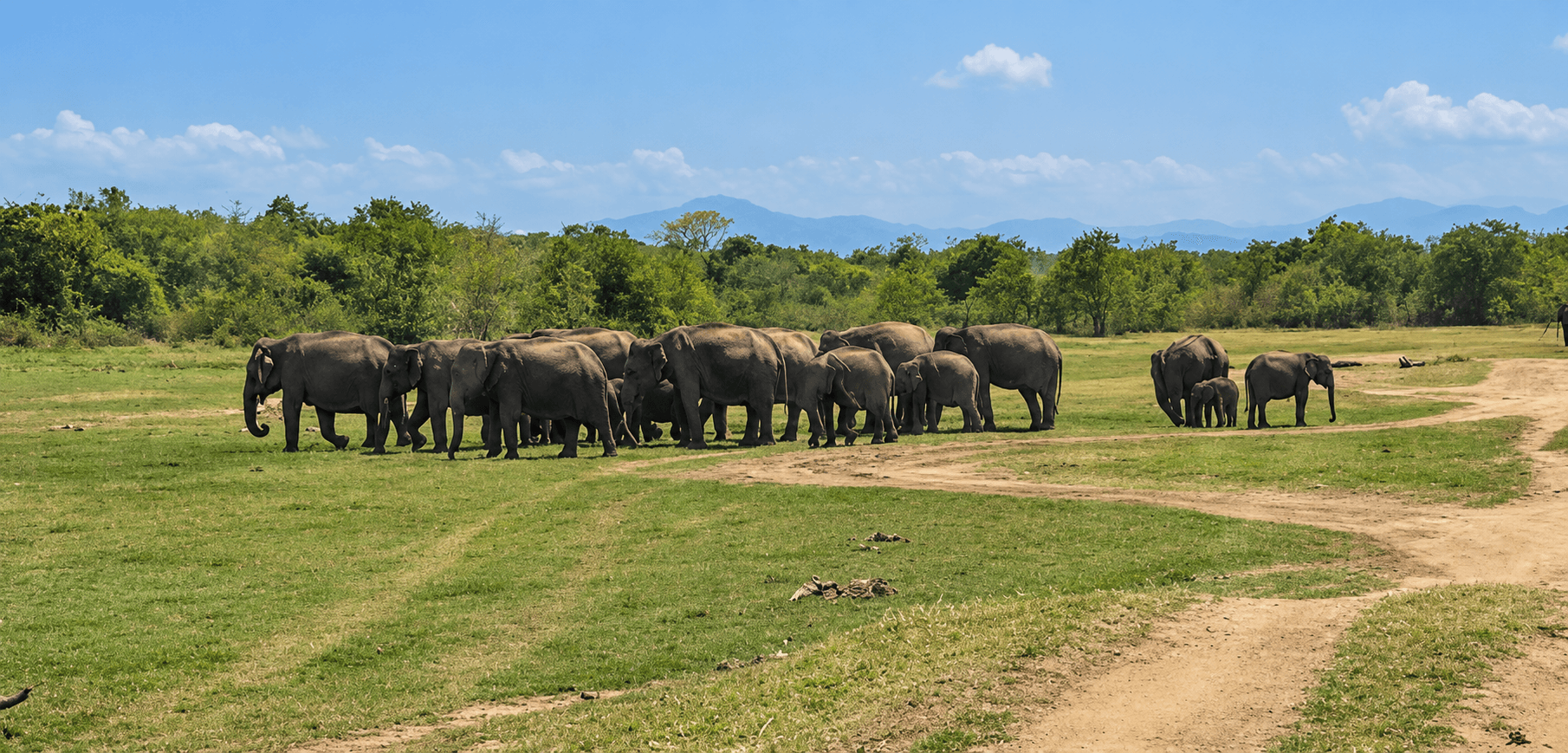
02:30 PM – 05:00 PM: The Elephant Gathering at Buthawa Wewa As the intense afternoon heat begins to soften, we head toward the open water margins of Buthawa Wewa. A matriarchal herd of fourteen Asian elephants (*Elephas maximus maximus*) emerges from the thorny forest. The matriarch, an imposing female in her mid-forties with deep temporal depressions and sweeping ears, leads the family directly into the cool water. Two five-month-old calves roll playfully in the mud, dunking their heads under water and trumpeting with joy, while older cows use their trunks to plaster their flanks with mineral-rich clay — a natural sunscreen and insect repellent.
05:00 PM – 06:15 PM: Twilight Golden Hour & The Evening Ambush The final hour before sunset is Yala's most cinematic window. The golden hour light turns warm and amber, casting long shadows across the red dirt roads. Near Gonagala, a young female leopard emerges from a drainage culvert. She is sleek, agile, and hunting. She freezes in a low crouch, her belly skimming the grass, her amber eyes locked onto a family of Indian peafowl foraging in a clearing 30 meters ahead. Step by agonizingly slow step, she advances without snapping a single dry twig. Although the peafowl detect her at the last fraction of a second and burst into noisy flight, the sheer poetry of her stealth stalk leaves everyone in our vehicle speechless. We exit through the Palatupana gate at 06:15 PM precisely as the sun touches the horizon.
Section 4: Bioacoustics and the Jungle’s Early Warning Radar System
In the dense, thorny scrub of Yala, visibility is often restricted to a few dozen meters. Successful tracking therefore relies almost entirely on auditory detection — decoding the complex vocal alarms and behavioral reactions of prey species.
1. Spotted Deer (*Axis axis*) Alarm Dynamics: Spotted deer are the primary prey of leopards in Yala, comprising over 60% of their total dietary biomass. Because they face constant predation pressure, deer have evolved an acute, multi-sensory early warning system: - **The Visual Alarm:** When a deer spots a stalking cat, it immediately raises its tail vertically, flashing the bright white underside to alert fellow herd members. - **The Staccato Bark (*"Dhank!"*):** A high-pitched, metallic bark produced by forcefully expelling air through the nostrils and vocal cords. - *Slow, rhythmic single barks:* The leopard is stationary or moving away slowly. - *Rapid, frantic, repeating barks:* The leopard is actively stalking or in the middle of an ambush sprint. - *Sudden cessation of barking:* The predator has slipped into dense cover or made a kill.
3. Sri Lanka Junglefowl (*Gallus lafayettii*): Sri Lanka’s vibrant national bird spends its day foraging in the leaf litter. When a leopard steps within its vicinity, the bird does not simply run; it bursts straight upward into the lower branches with a loud, clattering cackle (*"Klok-klok-klok-chick!"*). Because junglefowl have exceptional low-angle vision, their alarm calls often pinpoint leopards that are completely invisible to larger mammals.
4. Indian Peafowl (*Pavo cristatus*): Whether feeding in grassy glades or roosting in tall trees at dusk, peafowl emit a loud, trumpet-like, mournful cry (*"May-awe!"*) that carries up to two kilometers across the scrub, signaling the presence of an active predator on the move.
5. Sambar Deer (*Rusa unicolor*): The massive sambar deer reacts to leopards with a deep, resonant, bell-like boom (*"Dhonnk!"*), accompanied by heavy foot-stamping on the ground. A sambar alarm almost invariably denotes an encounter with a full-grown adult male leopard.
Section 5: Territorial Mechanics, Scent Ecology, and Population Dynamics
Leopard society in Yala is governed by strict territorial boundaries, spatial partitioning, and chemical communication networks.
Home Range Geometry and Density: - **Male Home Ranges:** An adult territorial male in Yala Block 1 maintains a home range of approximately 14 to 22 square kilometers. This territory is fiercely defended against rival males and typically overlaps the smaller ranges of 2 to 4 breeding females. - **Female Home Ranges:** Adult breeding females occupy compact, resource-dense territories spanning 6 to 10 square kilometers, situated around permanent waterholes and optimal denning sites. - **Record Population Density:** Research conducted by the Wildlife Conservation Society of Galle and the Department of Wildlife Conservation has documented density figures of 1.0 to 1.5 adult leopards per square kilometer in prime sectors of Block 1 — representing the highest concentration of wild leopards on planet Earth.
Chemical and Visual Scent Marking Techniques: 1. **Urine Spraying:** Leopards walk along territorial boundary trails, raising their tails to spray a pungent, lipid-rich urine mixture backward against tree trunks, rocky overhangs, and bushes at a height of 1.2 to 1.5 meters. This scent contains volatile fatty acids that communicate the individual's identity, sex, reproductive status, and the exact time of marking. 2. **Pedal Scrapes:** The cat vigorously scrapes its hind feet backward into the sandy ground, leaving two parallel trenches 20 centimeters long. Interdigital glands between the toe pads deposit pheromones directly into the soil, creating long-lasting chemical signposts. 3. **Claw Tree Rakes:** Leopards rear up on their hind legs and rake their front claws vertically down the trunks of soft-barked *Palu* and *Weera* trees, leaving prominent gouges that serve as visual markers to passing rivals. 4. **The Sawing Call:** A deep, raspy, rhythmic territorial vocalization that sounds like a coarse crosscut saw slicing through dry hardwood (*"Auh-ha... Auh-ha... Auh-ha"*). Emitted primarily between 04:00 AM and 07:00 AM, this low-frequency call travels up to three kilometers through the morning air, declaring territorial sovereignty and warning transient males to stay clear.
Section 6: Comprehensive Biodiversity Checklist of Yala National Park
Yala is one of the most biodiverse protected ecosystems in Asia, supporting over 44 species of mammals, 215 species of birds, 47 species of reptiles, 18 species of amphibians, and 21 species of freshwater fish.
1. Mammalian Guild: - **Carnivores:** Sri Lankan Leopard (*Panthera pardus kotiya*), Sloth Bear (*Melursus ursinus inornatus*), Golden Jackal (*Canis aureus naria*), Fishing Cat (*Prionailurus viverrinus*), Rusty-spotted Cat (*Prionailurus rubiginosus*), Jungle Cat (*Felis chaus kelaarti*), Ruddy Mongoose (*Urva smithii*), Grey Mongoose (*Urva edwardsii*), Stripe-necked Mongoose (*Urva vitticollis*), Asian Palm Civet (*Paradoxurus hermaphroditus*), Small Indian Civet (*Viverricula indica*), Eurasian Otter (*Lutra lutra*). - **Herbivores & Ungulates:** Asian Elephant (*Elephas maximus maximus*), Sambar Deer (*Rusa unicolor*), Sri Lankan Spotted Deer (*Axis axis ceylonensis*), Indian Muntjac / Barking Deer (*Muntiacus muntjak malabaricus*), Sri Lankan White-striped Chevrotain / Mouse Deer (*Moschiola meminna*), Wild Water Buffalo (*Bubalus arnee*), Wild Boar (*Sus scrofa affinis*). - **Primates:** Tufted Grey Langur (*Semnopithecus priam thersites*), Purple-faced Leaf Monkey (*Semnopithecus vetulus*), Toque Macaque (*Macaca sinica*), Red Slender Loris (*Loris tardigradus*). - **Small Mammals:** Indian Crested Porcupine (*Hystrix indica*), Indian Pangolin (*Manis crassicaudata*), Indian Hare (*Lepus nigricollis*), Grizzled Giant Squirrel (*Ratufa macroura*).
2. Avifaunal Guild (Key Highlights): - **National Endemics:** Sri Lanka Junglefowl, Sri Lanka Grey Hornbill, Sri Lanka Woodpigeon, Crimson-fronted Barbet, Brown-capped Babbler, Sri Lanka Swallow. - **Raptors & Birds of Prey:** Crested Serpent Eagle, Changeable Hawk-Eagle, White-bellied Sea Eagle, Grey-headed Fish Eagle, Brahminy Kite, Black-winged Kite, Peregrine Falcon, Crested Goshawk, Brown Fish Owl, Spot-bellied Eagle-Owl, Jungle Owlet. - **Wetland & Marine Birds:** Painted Stork, Black-necked Stork (rare breeding resident), Asian Openbill, Lesser Adjutant, Woolly-necked Stork, Spot-billed Pelican, Eurasian Spoonbill, Glossy Ibis, Black-headed Ibis, Great Thick-knee, Pheasant-tailed Jacana, Black-winged Stilt. - **Winter Migrants:** Greater Flamingo, Blue-tailed Bee-eater, Chestnut-headed Bee-eater, Indian Roller, Forest Wagtail, Grey Wagtail, Western Yellow Wagtail, Garganey, Pintail Duck, Marsh Sandpiper, Common Greenshank, Curlew Sandpiper, Pacific Golden Plover.
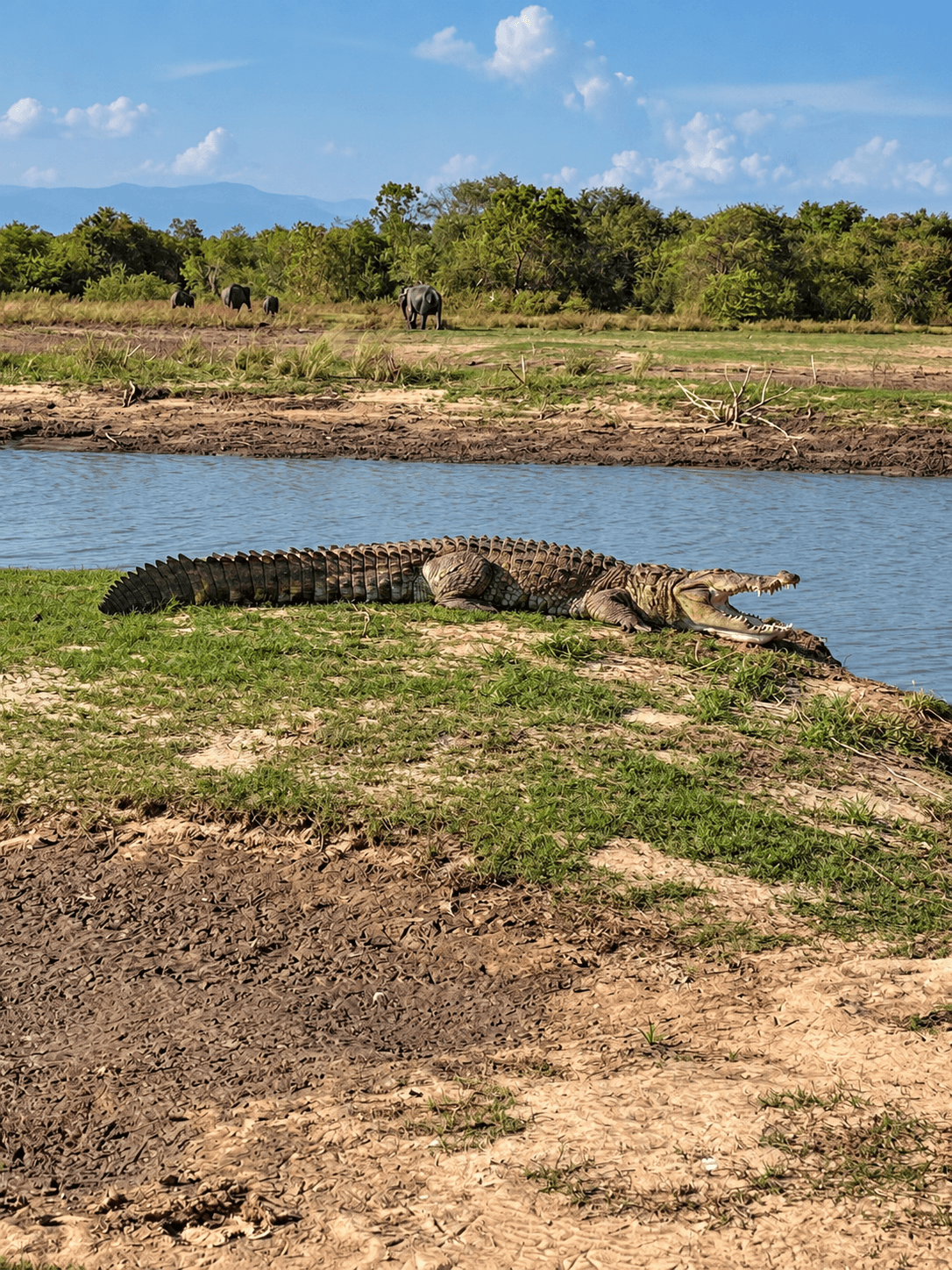
3. Reptiles & Amphibians: - **Crocodilians:** Mugger Crocodile (*Crocodylus palustris*), Saltwater Crocodile (*Crocodylus porosus*). - **Squamata (Snakes & Lizards):** Indian Rock Python (*Python molurus*), Russell's Viper (*Daboia russelii*), Indian Cobra (*Naja naja*), Common Krait (*Bungarus caeruleus*), Sri Lankan Green Pit Viper (*Craspedocephalus trigonocephalus*), Land Monitor (*Varanus bengalensis*), Water Monitor (*Varanus salvator*), Mugger Tortoise / Star Tortoise (*Geochelone elegans*), Indian Black Turtle (*Melanochelys trijuga*).
Section 7: Photographic Masterclass: Technical Settings, Composition & Gear Craft
Capturing world-class wildlife photographs in Yala requires mastering complex optical challenges: harsh tropical contrast, high-speed predator movement, fine airborne red dust, and dense scrub foliage.
1. The Ultimate Camera & Lens Configuration: - **Camera Bodies:** Dual full-frame mirrorless camera bodies (e.g., Sony A1, Sony A7R V, Canon EOS R5 Mark II, Nikon Z8/Z9) equipped with dedicated artificial intelligence animal-eye detection autofocus systems. - **Primary Super-Telephoto Lens:** A 100-400mm f/4.5-5.6 or 200-600mm f/5.6-6.3 zoom lens mounted on Body 1. This provides the crucial focal versatility needed when a leopard walks from 50 meters away to within 8 meters of your vehicle. - **Prime Telephoto Lens:** A 400mm f/2.8 or 600mm f/4 prime lens for breathtaking shallow depth of field, creamy background bokeh, and superior light gathering during low-light dawn and dusk tracking under dense forest canopies. - **Secondary Wide/Standard Zoom:** A 24-70mm f/2.8 or 70-200mm f/2.8 mounted on Body 2 for capturing dramatic environmental context: elephant herds framed against granite inselbergs, dramatic storm clouds, and wide-angle wildlife portraits.
2. Exact Field Exposure Settings: - **Dawn Leopard on Granite (06:00 AM – 07:30 AM):** - **Exposure Mode:** Manual (M) with Auto-ISO (ISO Ceiling: 6400). - **Aperture:** Wide open (f/2.8 – f/5.6) to separate the subject from distracting background scrub. - **Shutter Speed:** 1/800s to 1/1250s (ensures tack-sharp results even with minor vehicle engine vibration). - **Exposure Compensation:** +0.3 to +0.7 EV when shooting subjects silhouetted against bright dawn skies. - **Action & In-Flight Raptor Photography:** - **Shutter Speed:** 1/2500s to 1/4000s. - **Aperture:** f/6.3 to f/8 to ensure the entire wingspan remains within the depth-of-field plane. - **Autofocus Settings:** Continuous AF (AF-C / AI Servo) with 3D Dynamic Subject Tracking. - **Midday Heat Shimmer & Thermal Distortion Management:** - Between 11:30 AM and 02:30 PM, severe thermal convection currents (*heat haze*) rise from the dry sand roads. Shooting subjects beyond 35 meters will result in soft, wavy images regardless of lens quality. Focus on close-range subjects within 20 meters or wait for the cooling light of late afternoon.
3. Dust Mitigation Protocols: The fine red laterite dust of Yala is notoriously abrasive to delicate optical glass and camera sensors. - *Rule 1:* Never change camera lenses while driving on dirt roads. - *Rule 2:* Keep camera bodies wrapped inside padded neoprene covers or dry bags when moving between sighting locations. - *Rule 3:* Clean front lens elements only using air blowers and dedicated micro-fiber lens tissues with optical cleaning solution; never wipe dry dust directly across the lens with a cloth.
Section 8: The Seasonal Hydrological Matrix: Month-by-Month Wildlife Calendar
Yala’s wildlife movements, breeding cycles, and sighting probabilities are dictated entirely by the rhythmic arrival and retreat of the Northeast Monsoon.
| Month & Season | Rainfall & Hydrology | Vegetation State | Wildlife Activity & Sighting Probabilities | Recommended Photographic Focus |
|---|---|---|---|---|
| January | Moderate post-monsoon showers, lakes and tanks completely full. | Lush, emerald green, flowering water lilies. | Elephant family herds foraging in open clearings, high migratory bird counts, playful elephant calves. | Landscape ecology, birding, elephant herd dynamics. |
| February | Dry, sunny, mild daytime temperatures (28°C). | Vegetation begins drying out, flowers in bloom. | Excellent leopard sightings on sun-warmed rocks at dawn, high raptor activity. | Morning leopard portraits on granite inselbergs. |
| March | Warm, dry, clear blue skies. | Grasses yellow, visibility through scrub increases. | Leopards actively patrolling dry stream beds; sloth bears feeding on early fruits; crocodile courtship displays. | Big cat territorial patrols, reptile photography. |
| April | Warm, transitional inter-monsoon showers in late afternoon. | Moderate foliage, high insect activity. | High predator activity; birds displaying breeding plumage; peafowl courtship dances. | Peafowl displays, macro photography, leopard tracking. |
| May | Hot, dry winds begin; start of the *Palu* fruiting season. | Thickets thin out, small seasonal puddles evaporate. | **Sloth Bear Peak 1:** Sloth bears climbing *Palu* trees to feed on yellow berries; high daytime activity. | Sloth bears in trees, dawn leopard tracking. |
| June | Intense dry season; strong oceanic winds. | Deciduous trees shed leaves, maximum visibility. | **Sloth Bear Peak 2:** Bears gorging on Palu and Weera fruits; leopards congregating near permanent waterholes. | Sloth bear feeding behavior, predator ambushes. |
| July | Severe drought; minor waterholes dry out completely. | Sparse, dry thorn scrub, exposed mudflats. | **Peak Leopard Season:** High sighting density around remaining tanks (Buthawa, Padikema, Komari). | Dramatic waterhole ambushes, golden hour portraits. |
| August | Zenith of the dry season; intense heat (35°C). | Barren landscapes, cracked clay soil. | **Maximum Wildlife Concentration:** Hundreds of deer, buffalo, elephants, and leopards sharing shrinking waterholes. | High-drama predator-prey interactions. |
| September | Late dry season; severe water scarcity. | Parched, dramatic desert-like scenery. | High predator encounters; dramatic dust-filled golden hour light. Block 1 traditionally closes for ecological rest in late Sep/Oct. | Dust-backlit wildlife, dramatic sunset silhouettes. |
| October | Block 1 ecological rest closure (Blocks 5 & Lunugamvehera remain open). | First pre-monsoon thunderstorms arrive. | Heavy elephant migration through Lunugamvehera and Galge corridors; rapid greening of the landscape. | Exploring hidden sectors (Galge Block 5, Lunugamvehera). |
| November | **Northeast Monsoon (*Maha*):** Heavy torrential rains fill reservoirs. | Explosive green rebirth, fresh streams flowing. | Arrival of thousands of Palearctic migratory waterfowl; elephants feeding on fresh shoots. | Migratory birding, stormy dramatic skies. |
| December | Intermittent rain, cool refreshing temperatures (26°C). | Vibrant emerald jungle, brimming lagoons. | Peak flamingo numbers in Bundala; active birding; elephants roaming in large family aggregations. | Wetland avifauna, lush green wildlife portraits. |
Section 9: The Famous Leopards of Yala: Profiles of Legendary Big Cats
Over the past three decades, dedicated field naturalists and researchers have systematically cataloged Yala’s individual leopards using spot-pattern recognition (specifically the unique arrangement of whiskers and facial spots on the right and left muzzle). Several iconic individuals have achieved legendary status in Sri Lankan natural history.
1. The "Patanangala Male" (Alpha of the Coast) A colossal male weighing an estimated 88 kilograms, the Patanangala Male dominated the southern coastal zone from 2018 to 2024. Recognizable by a distinct notch on his left ear and a broad, battle-scarred muzzle, he was famous for his absolute fearlessness around vehicles. He frequently used parked safari jeeps as windbreaks or elevated hunting blinds, walking within three feet of open vehicles without breaking stride.
2. "Lucas" (The Padikema Lord) Son of the celebrated female "Cleopatra," Lucas was the undisputed monarch of the central rocky belt around Padikema, Jamburagala, and Kotadumuwehera. Known for his pristine, high-contrast golden coat and magnificent rosetting, Lucas was the most photographed leopard in Asian wildlife history, featured in multiple BBC, National Geographic, and Discovery Channel documentaries.
3. "Strawberry" (The Erythristic Wonder) One of the rarest genetic mutations ever documented in wild big cats, "Strawberry" was a female leopard exhibiting erythrism — a rare pigment mutation that replaced the typical black melanin in her rosettes with a warm, reddish-cinnamon hue. Sighted in the northern sectors of Block 1 and Block 2, she presented an ethereal, pinkish-gold appearance in morning sunlight.
4. "Harak Hora" (The Cattle Raider of the Boundary) A massive, cunning old male that inhabited the northern border of Block 1 along the Menik Ganga. His name (meaning "Cattle Thief" in Sinhala) originated from his daring nocturnal raids into buffer zone villages before he retreated into the impregnable thorn thickets of the park before dawn. Despite his reputation among villagers, inside the park he was a master stalker of wild boar and sambar deer.
5. "Cleopatra" (The Matriarch of Ruhuna) Perhaps the most prolific mother in Yala’s documented history, Cleopatra raised over six litters of cubs to adulthood between 2008 and 2019. She established her maternal territory in the boulder caves of Kotadumuwehera, teaching generations of cubs the delicate art of ambushing spotted deer at the Buthawa waterhole.
Section 10: Botanical Architecture and Ancient Flora of the Dry Zone
The flora of Yala National Park is not merely a backdrop; it is the physical foundation that dictates animal distribution, water retention, and shelter. The park comprises over 280 species of vascular plants, with distinct botanical adaptations designed to survive prolonged periods of severe tropical drought.
1. The Keystone Canopy Trees: - **Palu (*Manilkara hexandra*):** The undisputed king of the dry zone forest. These ancient, slow-growing hardwood giants can live for over 500 years. Their thick, grooved grey bark provides micro-habitats for tree frogs and geckos, while their dense canopy yields the famous sweet yellow berries that drive sloth bears, civets, and green pigeons into feeding frenzies each May and June. - **Weera (*Drypetes sepiaria*):** A dense, evergreen understory tree with smooth, mottled bark and small crimson berries. Weera thickets form impenetrable visual barriers that provide leopards with daytime resting cover and ambush concealment. - **Kumbuk (*Terminalia arjuna*):** Towering riverine giants lining the banks of the Menik Ganga and Kumbukkan Oya. With buttressed roots reaching deep into the water table, Kumbuk trees act as natural water purifiers, cooling the river water and creating thermal havens where elephants and leopards drink during the midday heat. - **Kohomba / Neem (*Azadirachta indica*):** Revered for its medicinal properties, neem trees produce bitter compounds that act as natural insect deterrents. Deer and sambar frequently rub their antlers and necks against neem bark to rid themselves of parasites.
2. Thorny Scrub and Undergrowth: - **Kukuruman (*Catunaregam spinosa*):** Extremely spiny deciduous shrub bearing yellow aromatic fruits. Its formidable thorns protect ground-nesting birds from terrestrial predators. - **Heen Karamba (*Carissa carandas*):** Thorny climbing shrub with sweet purple-black berries. Its dense, tangled ground mats are the preferred birthing den locations for mother leopards.
Section 11: Ancient Archaeology and Monastic Hermitages Inside Yala
Few visitors realize that Yala is an ancient archaeological treasure house. During the 2nd century BCE, this region was the cradle of the southern Kingdom of Ruhuna, harboring great hydraulic reservoirs, stone pillar palaces, and secluded Buddhist forest monasteries (*Aranya Senasana*).
1. Sithulpawwa Rock Temple (*Cithala Pabbatha*): Located deep within the park's central forest, Sithulpawwa is a 2,200-year-old rock monastery complex established by King Kavantissa. Ancient historical chronicles (*Mahavamsa*) record that Sithulpawwa was once home to over 12,000 Buddhist monks and arhats who lived in hundreds of natural rock cave shelters (*lena*). - **Drip Ledge Inscriptions (*Katarama*):** Above the entrance of each granite cave, ancient stone masons carved deep horizontal grooves into the rock to prevent monsoon rainwater from dripping inside. Beneath these drip ledges, inscriptions in Early Brahmi script record the donation of caves by ancient kings, ministers, and merchants. - **Ancient Paintings:** Inside the main cave shrine, fragments of 2,000-year-old Anuradhapura-era frescoes depict celestial maidens, lotus blossoms, and meditative motifs rendered in natural mineral pigments.
2. Magul Maha Viharaya and Akasa Chetiya: - **Magul Maha Viharaya:** Located near the northern boundary, this ancient temple is traditionally believed to be the sacred site where King Kavantissa married Princess Viharamahadevi, mother of Sri Lanka’s national hero King Dutugemunu. - **Akasa Chetiya:** A breathtaking stupa built on the sheer summit of an isolated granite pinnacle, accessible only via steep stone steps carved directly into the vertical rock face.
Section 12: Advanced Spoor Analysis: Master Tracker Field Handbook
Reading spoor (tracks, scats, and signs) is an indispensable skill that separates amateur safari drivers from master naturalists. In the shifting sands of Yala, every footstep tells an intricate story of time, direction, speed, and intent.
1. Distinguishing Feline vs. Canine Spoor: - **Leopard (*Panthera pardus*):** - *Shape:* Rounded, symmetrical track. - *Toes:* Four distinct digital pads arranged in an asymmetrical arc; the leading toe indicates whether it is a left or right foot. - *Claws:* **Never visible** in normal walking tracks. Cats possess protractile claws housed in protective sheaths; claws only extend during full-speed ambush sprints or tree climbing. - *Plantar Pad:* Broad, three-lobed rear margin and two indentations on the front border. - **Golden Jackal (*Canis aureus*):** - *Shape:* Elongated, oval track. - *Claws:* **Prominently visible** as sharp puncture marks ahead of each toe pad (canines cannot retract their claws). - *Plantar Pad:* Triangular with a single, flat rear lobe.
2. Aging Tracks: The Time Decay Index: - **0 to 30 Minutes Old:** Sand walls inside the pugmark are crisp, vertical, and damp. Windblown dust or insect tracks have not disturbed the interior. - **1 to 3 Hours Old:** Sunlight has dried the moist soil, causing the top rim of the print to crumble slightly. Fine windblown sand begins to settle in the lowest depressions. - **Over 6 Hours Old:** Animal tracks (beetles, ants, lizards) crisscross the print; edges are completely eroded by breeze. - **Dew & Moisture Indicator:** A track made before dawn will have morning dew beads resting inside the print; a track made after sunrise will cut cleanly through the dewy surface, revealing dry, powdery sand underneath.
3. Scat Analysis (Feces): - **Leopard Scat:** Segmented, cylindrical cords 2.5 to 3.5 cm in diameter, containing compressed white bone fragments, deer hair, and wild boar bristles. Fresh scat has a pungent, musky odor and glistening mucus coating; old scat turns chalk-white as digestive enzymes break down bone calcium. - **Sloth Bear Scat:** Loose, dark, unsegmented piles packed entirely with insect chitin (termite heads, beetle elytra) and undigested seeds of *Palu* and *Weera* fruits.
Section 13: Invertebrate Marvels, Micro-Fauna & Butterfly Migrations
Beyond the charismatic megafauna, Yala is home to an extraordinary world of smaller creatures that perform foundational ecological functions: pollination, soil aeration, and nutrient cycling.
1. The Great Monsoon Butterfly Migrations: Each year during the inter-monsoon months of November, December, and April, billions of butterflies embark on synchronized multi-directional migrations across the dry zone scrub. Clouds of thousands of butterflies flutter across the safari tracks: - **Crimson Rose (*Pachliopta hector*):** A magnificent swallowtail butterfly with striking crimson-red spots on its velvet-black wings, designated as an internationally protected species. - **Common Mormon (*Papilio polytes*):** Renowned for its remarkable female Batesian mimicry of unpalatable swallowtails. - **Blue Tiger (*Tirumala limniace*) & Dark Blue Tiger (*Tirumala septentrionis*):** Thousands of these delicate blue-and-black nymphalids congregate on flowering *Crotalaria* and heliotrope bushes to sip alkaloids.
2. Spiders, Scorpions & Ground Invertebrates: - **Giant Wood Spider (*Nephila pilipes*):** Females can attain a leg-span of over 15 centimeters, spinning enormous golden-yellow silk orb webs suspended between trees 10 feet above ground, strong enough to occasionally trap small birds and bats. - **Giant Forest Scorpion (*Heterometrus swammerdami*):** One of the largest scorpions in the world, growing up to 23 centimeters in length, living in deep underground burrows beneath ancient termite mounds. - **Jewel Beetles (*Buprestidae*):** Gleaming metallic emerald-and-gold beetles whose larvae bore through decaying hardwood trunks, accelerating nutrient return to the forest floor.
Section 14: Night in the Ruhuna Wilderness: Nocturnal Animal Ecology
When the park gates close at 06:30 PM and human presence vanishes, Yala undergoes an extraordinary ecological transformation. The diurnal creatures retire, and the nocturnal guild takes command of the landscape.
1. The Elusive Small Carnivores: - **Rusty-Spotted Cat (*Prionailurus rubiginosus*):** The world's smallest wild cat, weighing a mere 1.1 to 1.6 kilograms. With enormous amber eyes adapted for exceptional night vision, this miniature predator stalks grasshoppers, frogs, and small rodents in the dense grass. - **Fishing Cat (*Prionailurus viverrinus*):** A muscular, water-loving cat with semi-retractile claws and webbed front paws. It wades along the edges of Buthawa lagoon, using its paws to scoop out tilapia and climbing perch with lightning speed. - **Indian Pangolin (*Manis crassicaudata*):** An armored, prehistoric anteater covered in overlapping keratin scales. It wanders quietly through the undergrowth, using its powerful foreclaws to dig out underground ant nests.
2. Nocturnal Avians: - **Brown Fish Owl (*Ketupa zeylonensis*):** Perched silently on branches overhanging freshwater tanks, scanning for surfacing fish and crabs with acute binaural hearing. - **Spot-bellied Eagle-Owl (*Bubo nipalensis*):** Sri Lanka’s largest owl, known in local folklore as the *Ulama* or "Devil Bird" due to its chilling, human-like wailing cry that echoes across the forest at midnight. - **Jerdon's Nightjar (*Caprimulgus atripennis*):** Sitting directly on warm sandy roads at night, catching moths in mid-air before landing back on the trail.
Section 15: Comparative Analysis: Yala vs. Other National Parks of Sri Lanka
To plan the ideal wildlife itinerary, understanding the distinctive strengths of Sri Lanka's top national parks is essential:
| Feature & Focus | Yala National Park (Block 1–5) | Wilpattu National Park | Udawalawe National Park | Kumana National Park (Yala East) | Minneriya & Kaudulla |
|---|---|---|---|---|---|
| Primary Sighting Focus | **Leopards (World's Highest Density)**, Sloth Bears, Crocodiles. | Leopards in sand lakes (*Villus*), Sloth Bears, Barking Deer. | **Wild Asian Elephants (500+ resident population)**. | **Avian Paradise (Breeding Waterfowl)**, Leopards. | **The Elephant Gathering (300+ bulls & herds)**. |
| Dominant Landscape | Granite inselbergs, coastal lagoons, dry scrub. | Natural sand-rimmed lakes (*Villus*), dense evergreen forest. | Open savannah grasslands, teak forest, massive reservoir. | Coastal mangrove lagoons, sand dunes, ancient wewas. | Freshwater reservoir margins, deciduous forest. |
| Leopard Sighting Probability | Extremely High (85%–90%) | High (65%–75%) | Very Low (Occasional) | Moderate (45%–55%) | Very Low |
| Sloth Bear Sighting Probability | High (May–July Palu Season) | High (Year-round near Villus) | Low | Moderate | Low |
| Elephant Sighting Probability | High (Family herds & tuskers) | Moderate | Guaranteed (100%) | High | Guaranteed (July–October Gathering) |
| Best Travel Months | **May to September** (Peak Dry Season) | February to October | Year-round | **November to April** (Bird migration) | July to October |
| Crowd & Vehicle Density | High in Block 1; Low in Block 5. | Low to Moderate | Moderate | Very Low (Pristine isolation) | High during afternoon gatherings |
Section 16: Master Naturalist Glossary of Jungle Terminology
When traveling with our naturalist guides in Yala, you will hear authentic Sinhala and indigenous Vedda terms that describe specific geological, botanical, and animal features:
- *Kema* (කෙම): A natural hollow or cistern eroded into solid granite rock that collects and retains rainwater for months after monsoon rains, acting as an essential lifeline for leopards and birds during dry periods.
- *Wewa* (වැව): An ancient man-made irrigation reservoir or artificial lake constructed by ancient Sinhalese kings, surrounded by clay bunds and sluice gates.
- *Inselberg / Kanda* (කන්ද): An isolated, steep-sided hill or granite rock monolith rising abruptly from the level plain.
- *Palu* (පලු): *Manilkara hexandra*, the sacred ironwood tree whose golden summer berries attract bears and birds.
- *Pugmark* (පිය සටහන): The physical footprint left by an animal in sand, mud, or dust.
- *Sawing* (කියත් හඬ): The raspy, wood-cutting vocalization emitted by territorial leopards.
- *Allomothering*: A social phenomenon in elephant herds where non-maternal female cows assist in nursing, guiding, and protecting calves.
- *Infrasound*: Low-frequency acoustic waves below 20 Hz used by elephants for long-distance communication through ground vibrations.
Section 17: Comprehensive Expedition Planning: Itineraries for Wildlife Connoisseurs
To extract the utmost value from your expedition, our senior naturalist team has structured three master itineraries tailored to specific traveler aspirations:
Itinerary 2: The 2-Day "Wilds of Ruhuna" Multi-Block Journey - **Day 1 (Block 1 - Ruhuna Core):** Full immersion in the coastal lagoons, high-density leopard trails, and elephant herds of Block 1. - **Day 2 (Block 5 & Galge Wilderness):** Early morning departure to Block 5 via the Galge Gate. Encounter pristine riverine gallery forests, zero tourist crowds, towering canopy trees, ancient cave monasteries, and high-frequency sloth bear encounters.
Itinerary 3: The 3-Day "Southern Wildlife Triangle" (Yala, Bundala & Udawalawe) - **Day 1:** Yala Block 1 full-day leopard and megafauna expedition. - **Day 2 (Morning):** Bundala Ramsar Wetland flamingo and migratory shorebird boat/jeep safari. - **Day 2 (Afternoon):** Udawalawe Elephant Transit Home feeding session & afternoon elephant savannah safari. - **Day 3:** Dawn game drive in Yala Block 5 (Galge) followed by an archaeological cultural exploration of Sithulpawwa Rock Temple.
Section 18: The Master Naturalist's Field Log of Flora, Habitats & Micro-Climates
To fully comprehend the dynamic ecosystem of Yala, one must understand how soil composition, salinity gradients, and tree root networks dictate wildlife movements:
1. Saline Lagoon Ecosystems (Buthawa, Uraniya, Pilinnawa & Mahaseelawa) These shallow brackish waterbodies are separated from the open ocean by shifting sand dunes. They support halophytic flora such as *Avicennia marina* (Grey Mangrove) and *Salicornia brachiata*, providing rich feeding grounds for benthic invertebrates, which in turn sustain thousands of waders and wading birds.
2. Riverine Gallery Forests (Menik Ganga & Kumbukkan Oya) The riparian corridors are dominated by colossal *Terminalia arjuna* (Kumbuk), *Madhuca longifolia* (Mee), and *Polyalthia longifolia*. These evergreen linear oases remain cool and humid even at the peak of the dry season, serving as thermal refuges for leopards, barking deer, and endangered fishing cats.
3. Thorn Scrub & Rock Outcrop Micro-Ecology The thorny scrubland is adapted to survive prolonged moisture stress through microphyllous (small) leaves, deep taproots, and water-storing stems. Common species include *Flueggea leucopyrus* (Katu Pila), *Ziziphus oenopolia* (Heen Eraminiya), and *Dichrostachys cinerea* (Andara). On granite rocks, lithophytic lichens and xerophytic orchids thrive in rock crevices.
Section 19: Comprehensive Historical Timeline of Yala (3rd Century BCE to 2026)
- 3rd Century BCE: King Devanampiyatissa and King Kavantissa establish the Kingdom of Ruhuna, constructing irrigation tanks (*wewas*) and rock monasteries at Sithulpawwa and Magul Maha Viharaya.
- 2nd Century BCE – 10th Century CE: Thriving monastic and agricultural community; Sithulpawwa houses over 12,000 monks.
- 13th Century CE: Shift of population centers to the southwest; jungle reclaims ancient stone temples, reservoirs, and palaces.
- 1900: Designated as a Game Sanctuary under British Resident Administrator Henry Engelbrecht.
- March 1, 1938: Formally proclaimed as Ruhuna (Yala) National Park under the Fauna and Flora Protection Ordinance.
- 1969: Park expanded to incorporate Blocks 2 and 3; recognition as a premier research destination for Asian elephant and leopard studies.
- 2005: Surrounding coastal areas declared part of the UNESCO Biosphere Reserve network.
- 2026: Modern era of conservation: GPS wildlife collars, solar electric fences, and sustainable safari operations led by Yala Wild Safari.
Section 20: Wildlife Safety, Ethics & Encounter Protocols for Travelers
1. **Keep Limbs Inside the 4x4 Jeep:** Wild animals in Yala are habituated to the geometric profile of a vehicle, but will react defensively if a human silhouette steps outside or extends limbs outward. 2. **Never Use Flash Photography:** Sudden bright flashes startle big cats, temporarily blinding them and disrupting their hunting vision. 3. **Maintain Acoustic Mindfulness:** Whisper at all sightings; turn smartphone cameras and ringers to complete silent mode. 4. **Respect Maternal Space:** Give mother leopards and sloth bears with cubs an extra 10 meters of buffer distance; never position a vehicle between a mother and her offspring. 5. **Support Certified Local Naturalists:** Engaging licensed guides from surrounding communities ensures economic value directly supports wildlife protection.
Section 21: The Hydrographic Atlas of Ancient Ruhuna & Waterhole Dynamics
The survival of all mammalian life in Yala is governed by an ancient hydraulic matrix. Over two millennia ago, Sinhalese hydraulic engineers constructed an interconnected cascade of freshwater reservoirs (*wewas*) across the dry zone basin. These reservoirs continue to function today, replenishing subterranean groundwater aquifers and creating permanent water refuges:
1. **Buthawa Wewa (The Heart of Block 1):** A shallow, lily-fringed reservoir spanning 18 hectares, fed by seasonal rains and natural runoff. In the dry season, the muddy shores become a bustling stage for wild water buffaloes, mugger crocodiles, and herds of spotted deer. 2. **Mahaseelawa Lagoon (The Coastal Estuary):** A brackish lagoon connected to the sea via a narrow sandbar. During high tide, seawater infiltrates the estuary, creating ideal conditions for mullet, mud crabs, and feeding flocks of painted storks. 3. **Padikema Rock Cistern (The Granite Oasis):** A massive natural rock basin carved into granite, collecting thousands of liters of pure rainwater. Leopards regularly visit Padikema at dawn to drink before retiring into nearby caves. 4. **Uraniya Lagoon (The Birdwatcher's Haven):** Surrounded by salt-tolerant mangroves and coastal sandbanks, Uraniya provides nesting grounds for black-winged stilts and terns.
Section 22: Biomechanical Kinematics of Leopard Ambush Acceleration
The hunting mechanics of *Panthera pardus kotiya* represent an engineering marvel of biological evolution:
1. The Low-Crouch Stalk (0 to 5 km/h) The leopard drops its center of gravity within 10 centimeters of the ground. The scapula (shoulder blades) project above the spine, allowing the front limbs to move independently with zero vertical body oscillation. The elastic plantar pads dampen acoustic vibrations, while the tail drags lightly behind to maintain directional stability.
2. The Explosive Ambush Sprint (55 to 65 km/h) When closing the final 10-meter gap, the leopard converts stored potential energy in its hyper-flexible lumbar spine into kinetic propulsion. The hind legs compress like titanium springs, launching the cat forward in strides of over 6 meters. Retractile claws extend outward, acting like athletic track spikes to grip the dry sand.
3. Impact & Subjugation Dynamics The cat delivers a 75-kilogram impact to the prey's shoulder or flank, knocking the animal off balance. Simultaneously, the forelimbs wrap around the neck while the massive canines deliver a crushing bite to the trachea (strangulation) or the base of the skull (cervical severance).
Section 23: Complete Packing Checklist & Expedition Preparation Protocol
Ensure a flawless field experience with this comprehensive preparation checklist:
1. Essential Field Clothing: - 3x Lightweight, moisture-wicking cotton or linen shirts (Olive green, Khaki, Stone, Light Tan). - 2x Breathable safari cargo trousers with zippered pockets. - 1x Lightweight fleece or windbreaker jacket (essential for the chilly 05:00 AM open-top jeep drive). - 1x Wide-brimmed sun hat with adjustable chin cord. - 1x Polarized UV400 sunglasses to cut through lagoon and sand glare. - 1x Sturdy closed-toe trail sneakers or hiking shoes.
2. Optics & Electronics: - Binoculars: 8x42 or 10x42 with multi-coated roof prisms. - Camera body with extra lithium-ion batteries (cold dawn temperatures and continuous shooting drain batteries rapidly). - High-speed memory cards (minimum 128GB UHS-II / CFexpress with 250MB/s+ write speeds). - Universal power adapter with built-in USB-C fast charging. - Lens cleaning air-blower and microfiber cleaning cloths in sealed ziplock bags.
3. Health & Personal Care: - Mineral-based broad-spectrum SPF 50+ sunscreen. - Natural DEET-free citronella or lemon eucalyptus insect repellent. - Reusable double-walled vacuum insulated water bottle (750ml – 1L). - Personal basic first-aid kit (antihistamines, rehydration salts, blister bandages).
---
Section 24: The Master Naturalist's Epilogue & Wilderness Covenant
Standing atop the sun-drenched granite crest of Patanangala at dusk, watching the Indian Ocean surf crash against ancient reefs while the forest behind us echoes with the sawing call of a territorial leopard, one is reminded of our profound responsibility as custodians of the wild.
Every track imprinted in the red laterite dust, every termite mound excavated by a mother sloth bear, and every ancient Kumbuk tree cooling the sacred waters of the Menik Ganga is part of a delicate, irreplaceable evolutionary continuum that has endured for millions of years. When you journey with Yala Wild Safari, you are not merely a visitor; you become an active partner in habitat preservation, scientific monitoring, and the celebration of Sri Lanka’s richest biodiversity heritage.
We invite you to step aboard our custom-engineered 4x4 safaris, breathe in the fragrance of wild jasmine at dawn, and witness the magic of Ruhuna with the island’s most dedicated master naturalists.
---
Final Field Summary: The Spirit of Yala
Yala National Park remains an irreplaceable jewel of global biodiversity. In an era where wild places are increasingly fragmented, Yala stands as a testament to the power of conservation, ecological balance, and human reverence for the natural world. Whether you are observing a magnificent leopard surveying his empire from an ancient granite inselberg, listening to the resonant trumpeting of wild elephants crossing the Menik Ganga at sunset, or marveling at the iridescent flight of a kingfisher over a tranquil wetland, an expedition guided by true master naturalists transforms a simple vacation into an unforgettable lifelong connection with the natural world.
Species Covered in this Monograph:
Track the wildlife mentioned in this guide. Check off species you hope to encounter during your game drive: