
Section 1: The Heritage and Philosophy of Bush Camping in Ruhuna
To sleep under canvas on the threshold of Yala National Park is to reconnect with one of the oldest, most visceral human experiences: dwelling in intimate proximity with the untamed natural world. Long before modern tourism, British naturalists, Sinhala cartographers, and ancient Vedda trackers traversed the vast scrub jungles of Southern Sri Lanka, carrying lightweight canvas bivouacs and pitching camps beside dry sandy riverbeds beneath towering Kumbuk trees.
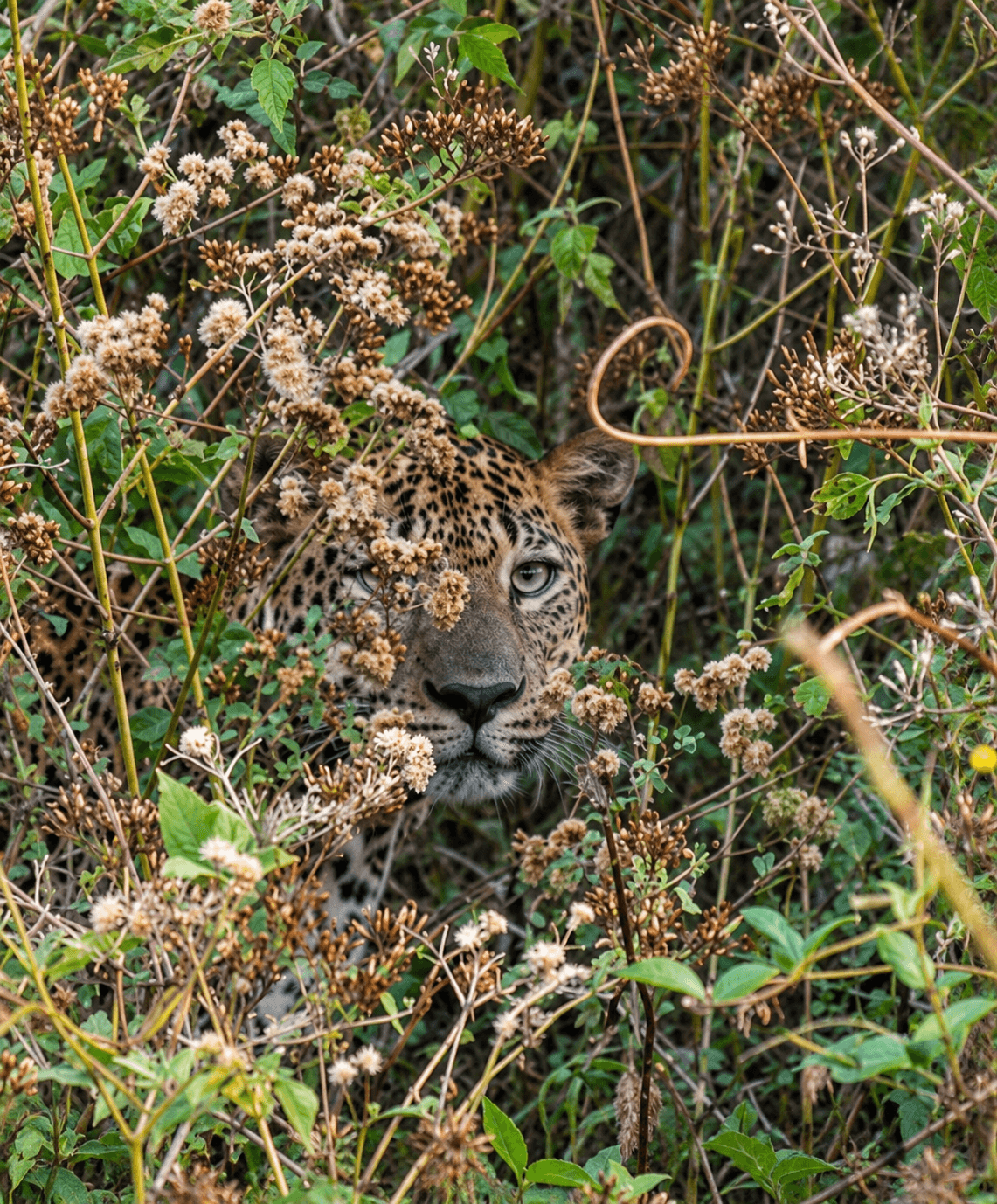
- You hear the raspy, crosscut sawing call of a territorial leopard reverberating through the dry scrub at 03:00 AM.
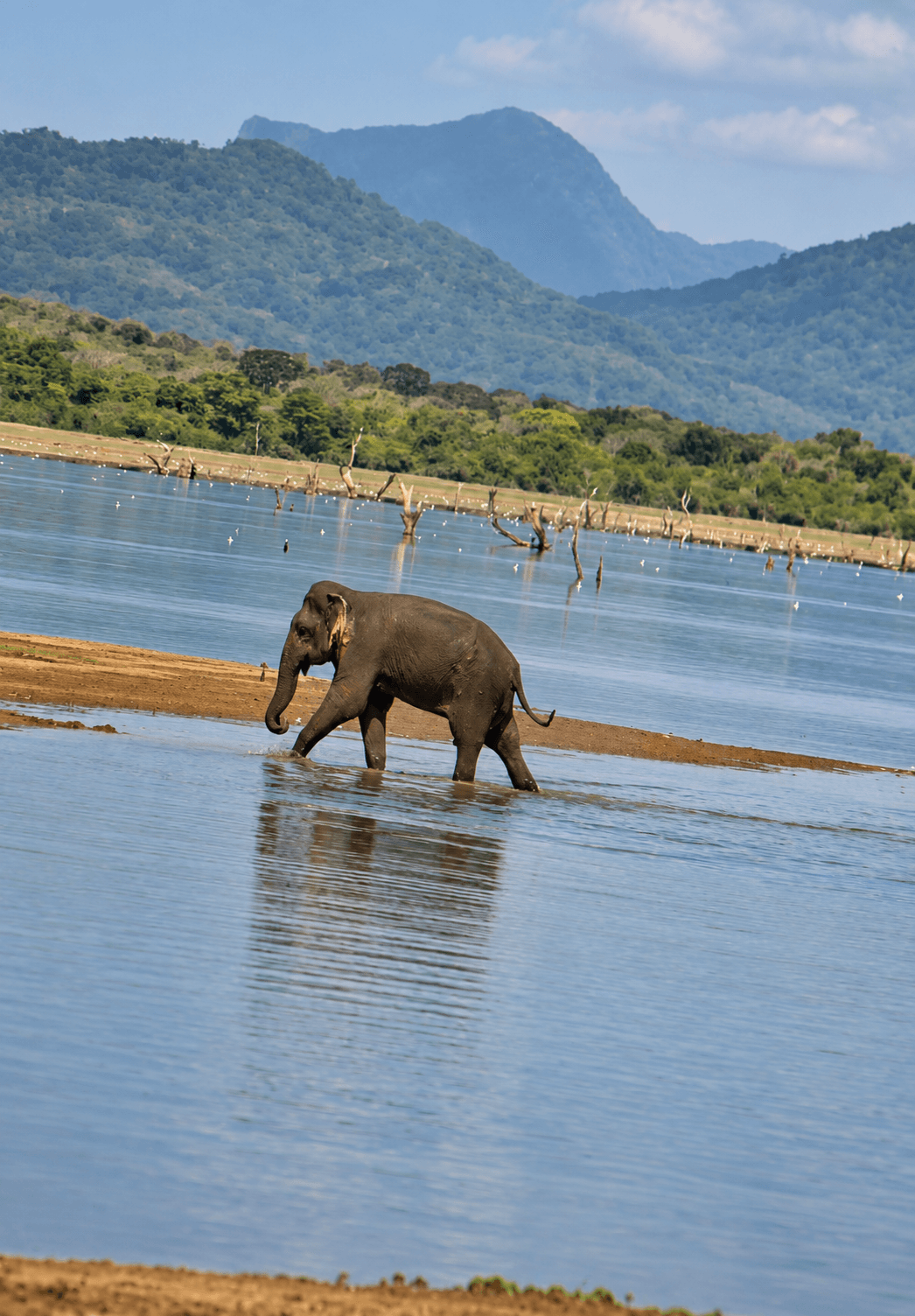
- You feel the subterranean infrasonic vibrations of an elephant herd browsing branches only eighty meters away through the forest floor.
- You inhale the rich, intoxicating scent of wild jasmine (*Jasminum angustifolium*), sun-baked red laterite clay, and hardwood woodsmoke from the evening campfire.
- You look upward through unpolluted, pitch-black skies to behold the luminous arch of the Milky Way galaxy spanning the Southern horizon.
This comprehensive guide explores the engineering, ecology, culinary traditions, wildlife safety protocols, and transformative spirit of luxury safari camping in the buffer zones of Yala National Park.
Section 2: Bioclimatic Architecture of Yala Buffer Zones: Boundaries, Corridors & Geography
- Core National Park Regulations: Under Sri Lanka's Fauna and Flora Protection Ordinance (FFPO), no permanent private lodging or overnight commercial camping is permitted inside the core boundaries of Yala National Park (Blocks 1 through 5). Visitors must strictly vacate the park by 06:30 PM each evening.
- The Vital Ecological Buffer Zones: Surrounding the national park lies an extensive belt of community forests, private wildlife reserves, and ancient hydraulic tanks known as the buffer zone. These areas — encompassing Palatupana, Yodakandiya, Nimalawa Sanctuary, Lunugamvehera corridor, and the Katagamuwa Sanctuary — serve as critical biological corridors for dispersing wildlife.
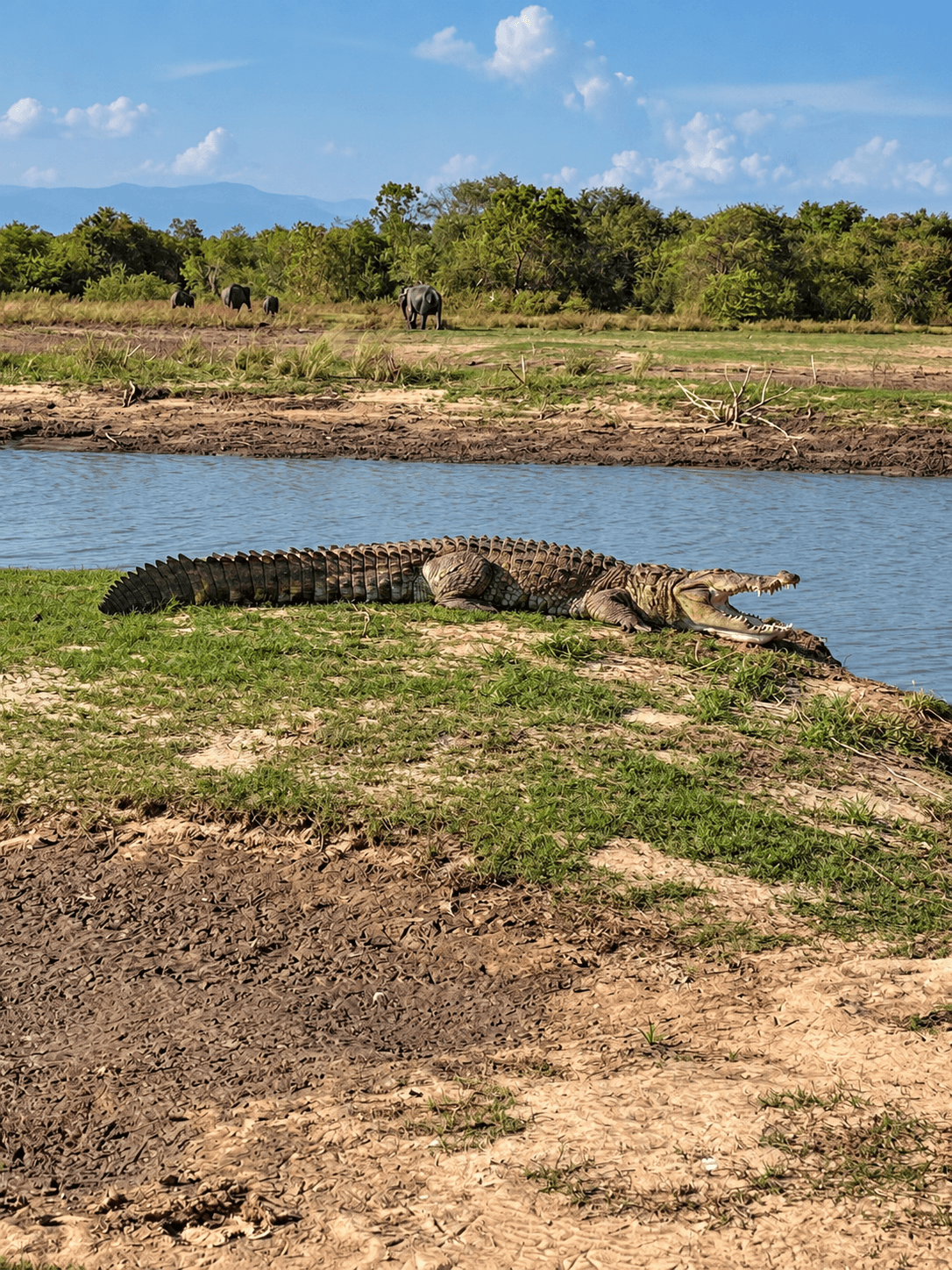
- Ecosystem Dynamics: Elephants, leopards, sloth bears, and jackals do not recognize administrative boundaries drawn on maps. During the cool evening and pre-dawn hours, megafauna regularly traverse these buffer habitats, foraging along seasonal streams and drinking from secluded village waterholes (*wewas*).
Setting up an expedition tented camp within these private buffer reserves provides an unmatched immersive experience: guests reside directly inside wildlife territory while ensuring zero habitat degradation to the national park's protected core.
Section 3: Luxury Glamping Tent Engineering: Canvas Architecture, Ventilation & Off-Grid Solar
Modern safari glamping represents a triumph of sustainable structural design. A world-class tented suite in Yala must withstand extreme equatorial environmental stresses — intense solar radiation (ambient temperatures up to 38°C), abrasive dust storms, sudden torrential monsoon deluges, and curious wildlife interactions.
1. Multi-Layered Canvas Architecture: - **Outer Solar Flysheet:** Heavy-duty, UV-stabilized PVC or ripstop canvas suspended 30 centimeters above the main roof. This air gap creates a natural thermal convection chimney, allowing rising hot air to escape and reducing internal ambient temperatures by up to 8°C without artificial air conditioning. - **Main Structural Canvas:** 450 to 550 GSM (grams per square meter) rot-proof, flame-retardant, waterproof poly-cotton canvas that breathes naturally, preventing internal condensation while dampening external acoustic turbulence. - **Inner Shade Netting:** High-density, fine-mesh insect screens covering oversized panoramic mesh windows, providing 360-degree views of the surrounding scrub while preventing nocturnal insects, scorpions, and mosquitoes from penetrating the sleeping quarters.
2. Off-Grid Solar Photovoltaics and Battery Storage: True eco-luxury operates without the noisy, fume-belching drone of diesel generators: - **Solar Arrays:** Ground-mounted monocrystalline solar panels capture intense dry-zone sunlight, charging high-capacity Lithium Iron Phosphate (LiFePO4) battery banks during daylight hours. - **Silent Clean Power:** At night, silent 24V-to-230V pure sine-wave inverters power whisper-quiet directional DC fans, energy-efficient warm LED lanterns (2700K color temperature), and USB-C high-speed charging stations for camera batteries and laptops.
3. Ensuite Bush Bathrooms & Water Conservation: - **Open-Air Starlight Showers:** Handcrafted river-stone basins and solar-heated water gravity-fed through high-efficiency low-flow rain showerheads open directly to the starlit sky. - **Eco-Waste Management:** Advanced biological septic digesters and reed-bed greywater filtration systems ensure that not a single drop of contaminated effluent touches the sensitive groundwater table.
Section 4: Deep Ecology of the Nocturnal Buffer Zone: Acoustic Auditory Landscape
For true naturalists, the greatest luxury of safari camping begins when the campfire embers die down and the camp descends into darkness. Human vision recedes, and the acoustic landscape takes command:
1. The Symphony of Nocturnal Bioacoustics: - **08:00 PM – 10:00 PM (The Early Shift):** The metallic, bell-like ping of tree frogs (*Polypedates cruciger*), the rhythmic chirping of field crickets, and the mournful ascending whistle of the Indian Nightjar (*Caprimulgus asiaticus*) sitting on dusty tracks. - **11:00 PM – 01:30 AM (The Midnight Predators):** The spine-chilling, echoing howl of a pack of Golden Jackals (*Canis aureus naria*) rallying on the ridge. Occasionally, the distant, bone-rattling wail of the Spot-bellied Eagle-Owl (*Bubo nipalensis*) — known in folklore as the mythical *Ulama* or "Devil Bird." - **02:30 AM – 04:30 AM (The Twilight Hunt):** The rasping sawing call of an adult male leopard declaring territorial sovereignty along a nearby dry riverbed. The snapping of thick tree branches as an old solitary bull elephant feeds on succulent cactus (*Euphorbia antiquorum*) just beyond the camp perimeter fence.
Sleeping under canvas trains the human brain to decode these ancient auditory signals, reawakening primal sensory instincts dormant in modern urban life.
Section 5: The Campfire Ethos & Bush Culinary Arts: Open-Flame Gastronomy & Clay Oven Baking
Food on safari is not mere fuel; it is a celebrated ritual that unites travelers, trackers, and naturalists around glowing wood embers:
1. The Heart of the Camp: The Bush Hearth: Each evening as twilight descends over the scrub, the camp hearth is lit using seasoned, sustainably harvested hardwood deadfall (*Tamarindus indica* and *Acacia leucophloea*). Hardwood produces intense, steady heat and fragrant aromatic smoke that deters flying insects while setting an enchanting atmosphere.
2. Sri Lankan Safari Gastronomy: - **Clay Pot Curries Over Embers:** Slow-simmered dry-zone venison-style mushroom and jackfruit curries, sweet pumpkin cooked in thick coconut milk, and fragrant river-fish curries spiced with black Ceylon pepper, roasted cumin, and pandan leaves. - **Open-Flame Charcoal Grilling:** Fresh jumbo prawns from Hambantota, skewered lagoon fish marinated in lime and crushed green chilies, and charred sweet corn served with melted grass-fed butter. - **Traditional Wood-Fired Hoppers (Appa):** Crisp, bowl-shaped fermented rice-flour pancakes with soft steamed centers, prepared fresh over open clay stoves and served with fiery red onion sambal (*Lunu Miris*) and organic free-range eggs. - **Cooling Beverages:** Chilled organic king coconuts (*Thambili*), fresh passionfruit juice, and craft Ceylon gin cocktails infused with wild cardamom and lemongrass.
Section 6: Leave No Trace & Zero-Footprint Environmental Engineering
A genuine eco-camp is a temporary guest in nature's home. At Yala Wild Safari, our wilderness camping philosophy is founded upon the internationally recognized **Leave No Trace (LNT)** framework:
1. **Zero Permanent Concrete:** All tents, walkways, and dining pavilions are constructed on elevated timber platforms supported by removable steel ground screws. When a camp shifts location, not a single trace of concrete remains in the soil. 2. **Total Plastic Elimination:** Single-use plastic bottles, straws, and packaging are strictly banned. Guests receive insulated stainless-steel vacuum flasks filled with reverse-osmosis purified water from our central camp dispensary. 3. **Composting and Biodegradable Waste Cycles:** Organic kitchen scraps are processed in hermetically sealed vermicompost tumblers to prevent attracting wild scavenging monkeys or boars. 4. **Dark-Sky Lighting Protocols:** Exterior lighting is strictly kept below 15 lumens, using warm amber LEDs (wavelengths > 590nm) directed downward toward footpaths. High-intensity floodlights and blue-spectrum lighting are banned to prevent disorienting nocturnal moths, bats, and nesting nightjars.
Section 7: Night Walks in Private Buffer Reserves: Herpetology, Arachnids & Slow Loris
While night game drives are strictly prohibited inside the national park, staying at a private buffer-zone reserve opens the door to an extraordinary adventure: guided nocturnal walking safaris.
- The Fluorescent World of Scorpions: Under ultraviolet blacklight, the exoskeletons of Sri Lanka's Giant Forest Scorpions (*Heterometrus swammerdami*) glow with a vivid, alien neon-cyan radiance.
- The Cryptic Slender Loris: Shining a gentle red beam into the dense *Weera* and *Palu* canopy reveals two glowing golden globes — the enormous, reflective tapetum lucidum eyes of the Grey Slender Loris (*Loris lydekkerianus nordicus*). Guests watch in hushed awe as this secretive primate stalks insects with agonizingly slow, deliberate hand-over-hand precision.
- Endemic Amphibians & Reptiles: Spotting the rare Painted Bullfrog (*Kaloula pulchra*), barking geckos (*Hemidactylus triedrus*), and harmless cat snakes (*Boiga trigonata*) foraging in the underbrush.
Section 8: Astrophotography and the Dark Skies of Southern Sri Lanka
Southern Sri Lanka's remote coastal belt boasts some of the lowest light pollution levels in all of South Asia, registering a pristine **Bortle Class 2** on the dark-sky scale.
1. The Celestial Display: Free from artificial urban glare, the night sky appears with crystalline clarity. The galactic core of the Milky Way arches across the sky from April through September, with dark dust lanes, the Carina Nebula, and the Magellanic Clouds visible to the naked eye.
2. Night Sky Photography Sessions: Our resident photography naturalists host nightly workshops around the camp perimeter: - Setting up sturdy carbon-fiber tripods and wide-angle f/1.4 lenses. - Calculating precise exposure times to capture razor-sharp pinpoint stars over the silhouettes of thorny umbrella thorns (*Vachellia planifrons*). - Creating stunning time-lapse star trails rotating around the Southern Celestial Pole.
Section 9: Wildlife Safety Protocols: Electric Perimeter Fences, Animal Encounters & Camp Etiquette
Safety is paramount when sleeping in big-cat and wild-elephant territory. Professional safari camps implement rigorous multi-tier defense systems:
1. High-Tensile Solar Electric Fencing: - The entire camp perimeter is encircled by a specialized high-tensile, 5-strand pulsating electric fence calibrated to 6,000–8,000 volts at ultra-low amperage (less than 5 joules). - **The Psychology of the Electric Fence:** The system delivers a sharp, non-lethal static shock that acts as a powerful psychological deterrent to wild elephants, bears, and leopards without causing physical injury. Wild animals quickly learn to respect the perimeter boundary.
2. Camp Escort Protocol: - After nightfall, guests are never permitted to walk between dining pavilions and sleeping tents unescorted. - Trained trackers carrying high-lumen tactical torches and signaling whistles escort each guest, systematically scanning surrounding trees and ground cover.
3. Tent Security Rules: - Tents must remain fully zipped at all times to prevent visits from inquisitive monkeys or snakes. - Never store open food, sweets, or fruit inside tents; the acute olfactory senses of wild elephants and toque macaques can detect sweet aromas through canvas from hundreds of meters away.
Section 10: Comparison Matrix: Fixed Safari Lodges vs. Luxury Tented Camps vs. Treehouses
| Feature & Factor | Mobile Luxury Tented Camp | Fixed Luxury Safari Lodge | Rustic Bush Treehouse |
|---|---|---|---|
| Wilderness Immersion | Maximum (100% Canvas & Open Air) | Moderate (Insulated Concrete/Glass) | High (Open Air / Rustic) |
| Acoustic Wildlife Proximity | Unfiltered 360-degree Night Sounds | Muffled through Double Glazing | High (Wind & Insect Exposed) |
| Environmental Footprint | Zero Trace (Solar, Removable) | High (Concrete Foundations) | Low to Moderate |
| Comfort & Amenities | Plush Beds, Ensuite Rain Shower, Fan | Full AC, Swimming Pool, Spa | Shared Bathrooms, Basic Bed |
| Location | Private Wilderness Buffer Reserves | Main Highway / Peripheral Roads | Edge-of-Village Farmland |
| Culinary Style | Open-Hearth Campfire Gastronomy | Buffet / Standard Restaurant | Home-Cooked Village Fare |
| Best For | True Nature Lovers, Photographers | Families, Luxury Leisure Seekers | Budget Adventurers, Backpackers |
Section 11: A 48-Hour Bushcraft & Camping Expedition Journal
To illustrate the immersive daily rhythm of a luxury glamping expedition, we present an unedited field journal from our camp director:
Day 1: Arrival & The Dusk Transformation - **03:30 PM:** Guests arrive at the base station and transfer into our rugged safari vehicles. As we cross into the private 50-acre buffer reserve, the noise of paved roads vanishes, replaced by the crunch of red sand under our all-terrain tires. - **04:15 PM:** Welcome cold king coconuts served under the shade of an ancient tamarind tree. Check-in to custom canvas suites featuring handcrafted teak furniture, Egyptian cotton linens, and brass washbasins. - **05:30 PM:** Sunset walk to an elevated granite outcrop overlooking a secluded waterhole. We observe a herd of spotted deer drinking warily while thousands of rose-ringed parakeets screech across the orange-tinted sky. - **07:00 PM:** The campfire is lit. Camp naturalists present an interactive briefing on nocturnal wildlife bioacoustics while craft cocktails and canapés are served around the fire pit. - **08:30 PM:** Four-course open-air bush dinner beneath a canopy of lanterns suspended from wild fig branches. The main course: fresh jumbo lagoon prawns grilled over tamarind coals with wild herb butter. - **10:00 PM:** Night walk along demarcated reserve boundaries. Guests observe glowing scorpions under UV light and a rare Grey Slender Loris hunting beetles in an ironwood canopy. - **11:00 PM:** Retreat to canvas suites. The night air cools to a refreshing 23°C. Distant jackal calls lull guests into a deep, primal sleep.
Day 2: The Pre-Dawn Wakeup & Park Immersion - **05:00 AM:** The gentle knock of our camp attendant delivering French press Ceylon coffee and warm ginger biscuits to the tent veranda. The jungle dawn chorus is in full throat. - **05:30 AM:** Boarding the safari vehicle. We are parked at the front of the gate queue at Palatupana by 05:45 AM, entering the park as the golden sun breaches the horizon. - **12:30 PM:** Return to camp for midday lunch and siesta. While midday heat drives temperatures to 34°C, the multi-layered solar flysheet keeps tent interiors breezy and comfortable. - **03:30 PM:** Afternoon game drive into Block 1, tracking elephants along Buthawa Lagoon. - **07:30 PM:** Traditional Sri Lankan hopper night around the bush hearth with live acoustic flute melodies and storytelling under the stars.
Section 12: Packing Guide for a Wilderness Glamping Adventure
Packing correctly ensures maximum comfort in the dry-zone bush:
Personal Field Gear: - **High-Power Compact Headlamp:** With dedicated red-light and UV modes. - **Natural Insect Repellent:** DEET-free or Picaridin-based repellents with eucalyptus or citronella oils. - **Optical Gear:** Binoculars (8x42 or 10x42) and camera setups with extra batteries (solar power in tents provides reliable recharging). - **Hydration:** Reusable vacuum-insulated water canteen.
Section 13: Buffer Zone Wildlife Checklist: Nocturnal Mammals & Birds
The wilderness buffer zones surrounding Yala harbor a specialized nocturnal animal guild rarely seen by daytime park visitors:
1. Mammalian Night Guild: - **Grey Slender Loris (*Loris lydekkerianus nordicus*):** Solitary, slow-moving arboreal insectivore. - **Golden Jackal (*Canis aureus naria*):** Pack hunters and scavengers active throughout twilight and dawn. - **Indian Crested Porcupine (*Hystrix indica*):** Foraging on roots and tubers around camp fences at midnight. - **Indian Pangolin (*Manis crassicaudata*):** Heavily armored anteaters excavating termite mounds. - **Rusty-spotted Cat (*Prionailurus rubiginosus*):** The world's smallest cat hunting small rodents in tall grass. - **Small Indian Civet (*Viverricula indica*):** Secretive omnivore frequenting fruiting bushes. - **Asian Palm Civet (*Paradoxurus hermaphroditus*):** Agile tree climber foraging on wild figs and Palu berries. - **Black-naped Hare (*Lepus nigricollis*):** Grazing in open grassy glades under the moonlight.
2. Nocturnal Avifauna: - **Spot-bellied Eagle-Owl (*Bubo nipalensis*):** Apex nocturnal avian predator preying on civets and pheasants. - **Brown Fish Owl (*Ketupa zeylonensis*):** Hunting fish and frogs along buffer-zone irrigation canals. - **Barn Owl (*Tyto alba*):** Hunting rodents over open farmland and scrub fields. - **Jerdon's Nightjar (*Caprimulgus atripennis*):** Camouflaged ground-nesting insectivore. - **Indian Nightjar (*Caprimulgus asiaticus*):** Calling in rhythmic patterns from dusty tracks.
Section 14: Seasonal Weather Adaptations for Camping: Monsoons, Dry Spells & Winds
Operating an eco-camp requires intimate synchronization with Sri Lanka's dual monsoon cycles:
1. The Dry Season (May through September): - **Characteristics:** Strong oceanic winds, dry heat, zero rain, clear skies. - **Camp Adjustments:** Roll up tent side walls to maximize airflow. Dampen perimeter sandy paths to suppress dust. Early-morning bird baths around camp water basins attract dozens of species within arm's reach.
2. The Northeast Monsoon Season (November through January): - **Characteristics:** Torrential tropical downpours, explosive botanical rebirth, cool breezes. - **Camp Adjustments:** Deploy waterproof PVC outer rain-flies. Elevated timber decks ensure that heavy surface runoff flows freely underneath without touching canvas floors. Evening campfires are moved under soaring thatched *Kadapala* pavilions.
Section 15: Frequently Asked Questions About Safari Camping in Yala
Q1: Is it dangerous to sleep in a tent near wild leopards and elephants? **Answer:** Not when camping with professional operators. Our camps are protected by continuous solar electric perimeter fences, 24-hour perimeter night watchmen, and strict safety protocols. Animals inherently avoid human encampments, and our perimeter fences have maintained a 100% safety record across more than a decade of operation.
Q2: Do the tents have private bathrooms? **Answer:** Yes. Every luxury tented suite features a private, fully enclosed ensuite bathroom complete with running hot water, flush toilets, handcrafted river-stone sinks, and open-air rain showers under the stars.
Q3: Is there electricity to charge camera batteries and phones? **Answer:** Yes. Our off-grid solar-battery microgrids provide 230V AC standard international sockets and USB-C high-speed ports inside every tent, operating completely silently 24 hours a day.
Section 16: The Wilderness Ethic & Concluding Reflections
When dawn breaks over your canvas tent in the Yala buffer zone, the morning sun bathes the scrub in golden light and the distant roar of the Indian Ocean merges with the piping of barbets, you realize that true luxury is not marble lobbies or gold-plated fixtures; true luxury is silence, space, untamed wilderness, and an unbroken connection to the living earth.
At Yala Wild Safari, our luxury eco-camping expeditions are crafted with reverence for nature, support for local conservation communities, and an uncompromising commitment to environmental integrity. We invite you to step out of the ordinary, sleep beneath the Southern stars, and discover the primal heartbeat of wild Ceylon.
Bushcraft Masterclass: Water Purification, Firecraft & Orientation in the Dry Zone
Wilderness survival and traditional bushcraft have been practiced across Ruhuna for thousands of years by indigenous Vedda hunter-gatherers and Sinhalese boundary rangers. Understanding these ancient techniques enriches every safari camping experience:
- Digging Traditional Sand Wells (*Goda Kemas*): By locating ancient bends in dry riverbeds where vegetation such as *Terminalia arjuna* (Kumbuk) and *Vitex leucoxylon* remain lush, naturalists dig through the top 50 to 80 centimeters of dry sand to reach cool, subterranean moisture. The sand acts as a natural mechanical filter, straining out silt and organic debris.
- Solar Still Condensation: Erecting a conical plastic sheet over crushed aromatic leaves (*Azadirachta indica* / Neem) inside a sand pit creates solar evaporation. The evaporating moisture condenses on the underside of the plastic sheet and drips into a central collection vessel, providing sterile, distilled drinking water in emergency wilderness situations.
- Tinder Selection: The fluffy seed pods of the Silk Cotton tree (*Bombax ceiba*) and the paper-thin fibrous bark of *Melaleuca leucadendra* catch microscopic sparks instantaneously.
- Firewood Density Ratings: Softwoods burn out quickly and produce excessive choking smoke. Experienced camp stewards exclusively gather deadfall from slow-growing dry-zone hardwoods such as Ironwood (*Mesua ferrea*), Tamarind (*Tamarindus indica*), and Ceylon Ebony (*Diospyros ebenum*). These dense hardwoods combust at temperatures exceeding 800°C, leaving long-lasting glowing charcoal embers that sustain open-hearth baking and keep predators at bay throughout the night.
- The Southern Cross (*Crux*): Visible low on the southern horizon from January to June, extending a line five times the length of the long axis of the cross downward pinpoints True South over the Indian Ocean.
- Termite Mound Orientation: The subterranean architects of *Odontotermes redemanni* build towering clay spires with distinct directional alignments. Due to prevailing monsoon wind currents and solar exposure, termite ventilation chimneys in Yala consistently face north-northeast, providing a reliable compass heading even under overcast midday skies.
The Eco-Camp Environmental Engineering Matrix
To demonstrate how our off-grid luxury camps operate without damaging fragile buffer-zone ecosystems, we provide a complete engineering blueprint of our sustainable infrastructure:
- Every tented suite uses low-flow aeration faucets that deliver 4.5 liters per minute compared to standard hotel fixtures that waste 15 liters per minute.
- Greywater from showers and hand basins drains into a multi-chamber subsurface reed-bed filtration system (*constructed wetland*). Layers of coarse gravel, activated charcoal, and the root networks of native reeds (*Typha angustifolia*) filter out biodegradable soaps and organic matter through natural microbial bioremediation. The purified discharge water irrigates drought-tolerant indigenous trees around the camp perimeter, creating a green boundary buffer.
- Photovoltaic Generation: A decentralized array of twenty-four 450W monocrystalline solar panels generating 10.8 kW peak output.
- Energy Storage: Two 15kWh Lithium Iron Phosphate (LiFePO4) 48V battery banks engineered to provide 48 hours of continuous autonomous operation even during heavy monsoon cloud cover.
- Acoustic Peace: By eliminating internal combustion diesel generators, the ambient noise floor around the camp drops to under 25 decibels at night—comparable to the rustle of leaves in a light breeze—ensuring that wild animals feel comfortable approaching the surrounding watering holes.
- 100% of organic kitchen waste is shredded and digested in dual-batch aerobic composters, generating nutrient-rich organic mulch utilized in local community agroforestry nurseries.
- Glass bottles and metal cans are segregated at source and transported to regional recycling hubs in Hambantota.
- All toiletries supplied in tents (shampoo, body wash, sunscreen) are formulated from 100% plant-based, certified reef-safe and soil-safe botanicals, ensuring that zero toxic surfactants contaminate local soil biology.
Buffer Zone Floral Micro-Habitats & Botanical Wisdom
The vegetation flanking the buffer zones of Yala contains hundreds of plants celebrated in ancient Ayurvedic medicine and folklore:
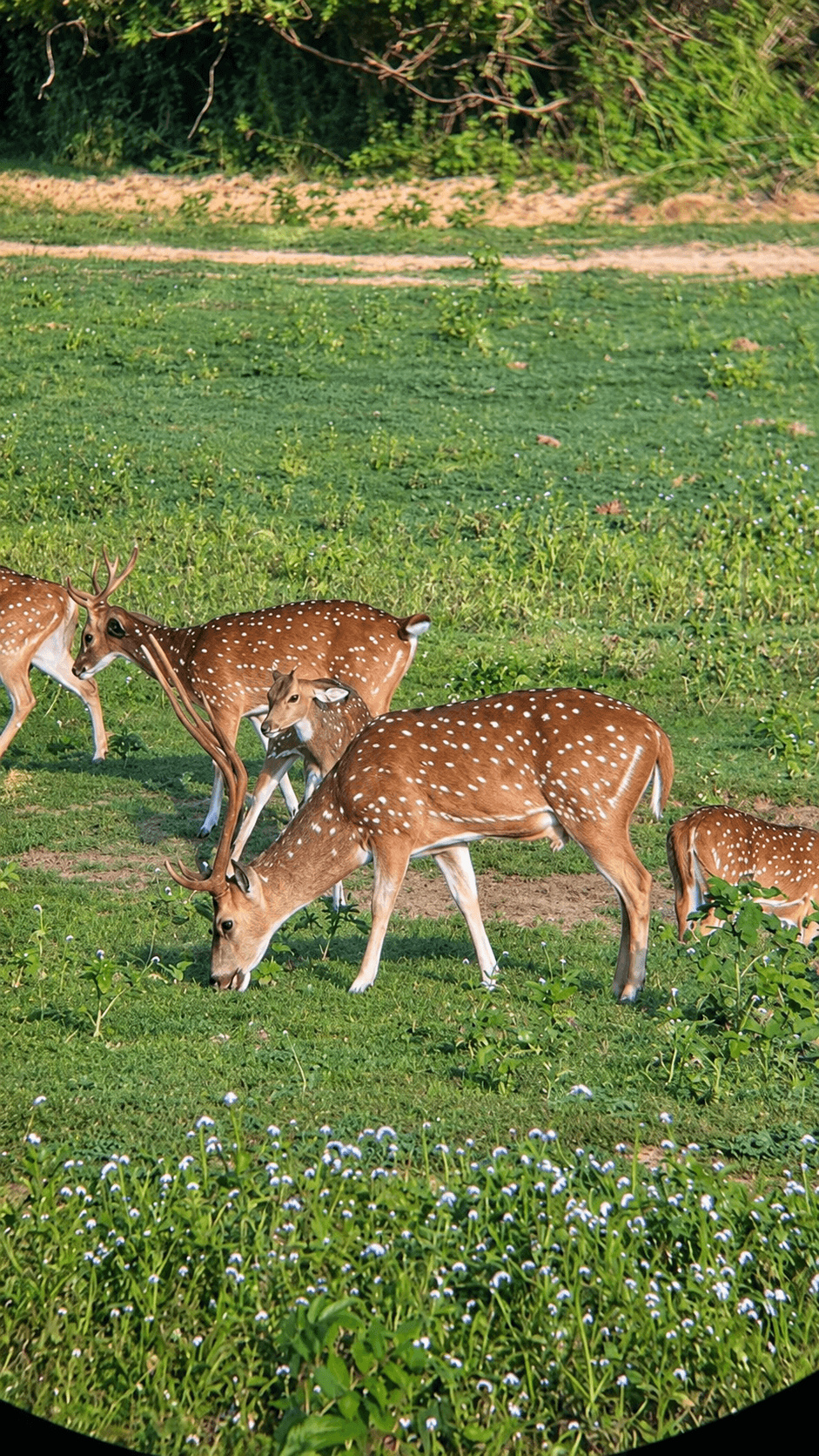
- Beli (*Aegle marmelos* - Wood Apple): A sacred dry-zone tree bearing hard-shelled round fruits packed with sweet, tangy brown pulp. Sloth bears and elephants devour fallen fruits, dispersing seeds in their dung. In camp, fresh Wood Apple nectar mixed with coconut milk and jaggery forms a signature welcome drink.
- Ranawara (*Cassia auriculata*): A bright yellow flowering shrub that carpets dry scrub borders. Infusions brewed from dried Ranawara blossoms have been used for centuries by indigenous trackers to purify blood, reduce body heat, and soothe muscular fatigue after arduous 12-hour tracking patrols.
- Karapincha (*Murraya koenigii* - Curry Leaf Tree): Growing wild in the understory, wild curry leaves possess intense, peppery aromatic oils far more concentrated than cultivated domestic varieties. Camp chefs crush wild leaves into twilight marinades for grilled river fish.
- Katu Andara (*Dichrostachys cinerea* - Sickle Bush): A spiny shrub featuring breathtaking two-toned lantern flowers (pink upper tassels and yellow lower bells). Its wood is so dense that it is traditionally known as 'wood-nail', utilized for creating indestructible tent stakes and boundary fence supports.
Wilderness First Aid, Medical Logistics & Emergency Response in Remote Safari Camps
Operating an authentic wilderness glamping camp far from urban medical centers necessitates rigorous emergency preparedness and medical protocols. In the dry zone of Ruhuna, naturalists and camp directors must be prepared for extreme tropical environmental variables:
- Electrolyte Matrix Protocol: Our camp dispensaries provide daily oral rehydration salts (ORS) formulated according to World Health Organization standards (sodium chloride, anhydrous glucose, potassium chloride, and trisodium citrate). Guests are advised to consume a minimum of 3.5 to 4.5 liters of fluids daily.
- Recognizing Heat Exhaustion vs. Heat Stroke: Naturalists are trained to monitor guests for subtle physiological symptoms of heat exhaustion: pale, clammy skin, profuse sweating, dizziness, and mild nausea. If symptoms progress to heat stroke (confusion, cessation of sweating, hot dry skin, core temperature exceeding 40°C), immediate emergency protocols are initiated: relocating the patient to our climate-controlled medical tent, applying chilled wet sheets, directing high-velocity fans across the skin, and infusing intravenous normal saline.
- Pressure Immobilization vs. Tourniquets: Traditional tourniquets, arterial constrictions, cutting, or suction are strictly prohibited, as they cause severe localized tissue necrosis. Instead, our first-responders apply broad elastic pressure-immobilization bandages across the affected limb at 40–70 mmHg pressure, splinting the limb to prevent muscular contraction and slowing lymphatic venom dissemination.
- Hospital Evacuation Corridor: Hambantota General Hospital, situated approximately 35 minutes by emergency vehicle from Palatupana gate, maintains 24-hour stocks of polyvalent antivenom and intensive care ventilator facilities. Our camp maintains direct radio telemetry with the hospital emergency triage director.
#### 3. Satellite Telemetry & Remote Communication: Because deep buffer zone valleys occasionally experience cellular coverage shadows, our expedition vehicles and camp command posts are equipped with Garmin inReach Explorer+ satellite communicators operating on the global Iridium satellite constellation. This provides instant two-way SOS text telemetry and emergency helicopter evacuation coordination with Sri Lankan Air Force search-and-rescue squadrons based at Weerawila Air Base.
The History of Wilderness Expeditions in Ruhuna: From Ancient Hermits to Colonial Encampments
The practice of wilderness camping in Southern Sri Lanka spans over two millennia of documented human history:
- They cut no living trees, relying solely on deadwood for warmth and cooking.
- They carved shallow drip ledges (*katarama*) above cave portals to channel monsoon rain into natural rock cisterns (*kemas*), creating zero-impact shelters that remain intact over 2,200 years later.
- They coexisted in peaceful harmony with wild elephants and leopards, documented in the ancient Pali commentaries (*Visuddhimagga*), which describe big cats lounging quietly near meditating ascetics without hostility.
- Early expeditions traveled with bullock carts carrying massive double-roofed canvas marquee tents, brass camp beds, and cast-iron stoves.
- In 1900, under the foresight of the Ceylon Game Protection Society, Yala was officially proclaimed a Resident Sportsmen's Reserve, marking the formal beginning of structured wilderness tracking and camping traditions.
- Early game rangers developed the unique art of reading the sandy soils of Ruhuna, establishing the foundational tracking methodologies that our modern naturalists still practice today.
Community Conservation & Village Partnerships: The Human Fabric of the Buffer Zone
A wilderness camp cannot exist in isolation; its long-term survival depends entirely on genuine partnerships with indigenous rural communities living in the surrounding agrarian landscape:
- Veteran agriculturalists whose families have farmed the dry zone for generations possess an intuitive understanding of animal movements, wind shifts, and plant phonology that no classroom textbook can teach.
- We provide comprehensive hospitality certification, conversational English and European language training, advanced first aid instruction, and ornithological taxonomy education, empowering local youth with high-earning, dignified careers in sustainable ecotourism.
- Organic red heirloom rice (*Suwandel* and *Kalu Heenati*) grown in the fertile silt of ancient village irrigation tanks.
- Sun-ripened organic watermelons, papayas, and wild passionfruits harvested daily by farming families in Thissamaharama.
- Fresh artisanal buffalo curd (*Meedikiri*) produced by traditional dairy herders in Weerawila, served in unglazed clay pots with wild kithul palm treacle.
Comprehensive Field Checklist: 15 Nocturnal Wildlife Species of the Yala Buffer Zone
To aid visiting naturalists on night walks around our private reserve perimeters, we provide an extensive biological field identification matrix:
- Taxonomy: Suborder Strepsirrhini, Family Lorisidae.
- Identification: Small arboreal primate with enormous, forward-facing golden eyes, slender limbs, and no visible tail.
- Ethology: Moves with silent, deliberate, hand-over-hand pacing through the middle canopy. Preys upon praying mantises, katydids, small geckos, and tree frogs. Its eyes produce an intense orange-gold retroreflection when caught in a gentle flashlight beam.
- Taxonomy: Order Pholidota, Family Manidae.
- Identification: Covered in large, overlapping pale olive-brown keratin scales. Prehensile tail, powerful curved digging foreclaws.
- Ethology: Nocturnal and highly secretive. Forages on the ground, utilizing an acute sense of smell to locate underground ant and termite colonies. When threatened, rolls into an impenetrable spherical ball.
- Taxonomy: Suborder Feliformia, Family Felidae.
- Identification: Extremely petite wild cat (adult weight 1.1 to 1.6 kg). Fawn-grey coat adorned with rust-colored elongated spots and white eye markings.
- Ethology: Terrestrial and semi-arboreal, stalking through dense grass and shrub thickets. Preys on small rodents, crickets, and skinks. Possesses extraordinary acoustic sensitivity.
- Taxonomy: Family Viverridae.
- Identification: Long, pointed snout, grey-brown coat with distinct rows of dark spots, and a boldly banded black-and-white tail.
- Ethology: Forages predominantly on the forest floor, consuming fruits, fallen berries, carrion, frogs, and invertebrates. Leaves pungent musky scent marks on low rocks.
- Taxonomy: Family Viverridae.
- Identification: Dark greyish-brown coat with three faint longitudinal dorsal stripes and dark facial mask.
- Ethology: Highly arboreal, leaping between tree branches with remarkable agility. Consumes wild figs, *Palu* berries, and the sweet nectar of flowering palms.
- Taxonomy: Family Canidae.
- Identification: Wolf-like canid with golden-buff fur interspersed with black-tipped hairs across the dorsal ridge. Bushy black-tipped tail.
- Ethology: Operates in monogamous pairs or family packs of 4 to 8 individuals. Vocalizes in eerie synchronized choruses at dusk and dawn to maintain territorial cohesion and coordinate cooperative hunts.
- Taxonomy: Family Hystricidae.
- Identification: Large rodent (10–16 kg) covered in long, sharp, black-and-white banded quills that erect into an imposing defensive crest.
- Ethology: Excavates extensive underground warrens. Forages at night on bulbs, tubers, tree bark, and fallen fruits. When threatened, rattles its hollow tail quills and charges backward into predators.
- Taxonomy: Family Leporidae.
- Identification: Greyish-brown fur with a prominent black patch extending along the nape of the neck.
- Ethology: Grazes in open grassy clearings around camp perimeters. Highly vigilant, freezing motionless when danger approaches before executing explosive zig-zag evasive sprints up to 50 km/h.
- Taxonomy: Family Strigidae.
- Identification: Massive owl (shoulder height 60 cm) with prominent, outward-slanting ear tufts, deep brown eyes, and boldly barred white-and-dark-brown breast feathers.
- Ethology: The supreme avian night predator of Sri Lanka. Capable of subduing prey as large as adult peafowl, monitor lizards, civets, and young spotted deer fawns. Emits a chilling, human-like wailing territorial call that gave rise to the legendary 'Devil Bird' folklore.
- Taxonomy: Family Strigidae.
- Identification: Large owl with bright yellow irises, rufous-brown streaked plumage, and bare, unfeathered yellow tarsi (adapted for fishing).
- Ethology: Perches on branches overhanging freshwater tanks and slow-moving streams. Drops silently onto the water surface to snatch fish, freshwater crabs, and frogs with needle-sharp curved talons.
- Taxonomy: Family Caprimulgidae.
- Identification: Intricately cryptically mottled grey, brown, and rufous plumage that blends invisibly into fallen leaf litter.
- Ethology: Rests motionless on the ground during daylight. Takes flight at dusk to hawk flying beetles, moths, and winged termites in mid-air using a wide, bristle-fringed gape.
- Taxonomy: Family Caprimulgidae.
- Identification: Slightly smaller nightjar with a distinctive calling vocalization resembling a ping-pong ball bouncing rapidly on a stone table (*'Chuk-chuk-chuk-chuk-r-r-r'*).
- Ethology: Sits directly on red sandy tracks at night, its eyes reflecting bright fiery-ruby in jeep headlights.
- Taxonomy: Family Gekkonidae.
- Identification: Robust ground-dwelling gecko with prominent tubercular scales and bold white and dark-brown bands.
- Ethology: Inhabits termite mounds and rocky crevices. Emits a loud, raspy barking distress vocalization when cornered.
- Taxonomy: Family Scorpionidae.
- Identification: Massive, pitch-black arachnid growing up to 23 cm in length with powerful, rounded pedipalp pincers.
- Ethology: Excavates deep diagonal burrows in red laterite soil. While possessing a venomous sting, it relies primarily on its crushing claw strength to subdue prey. Fluoresces vivid neon blue-green under 365nm UV light.
- Taxonomy: Family Bufonidae.
- Identification: Warty, robust amphibian with prominent black ridges along the cranial crests and large parotoid poison glands behind the eyes.
- Ethology: Congregrates in hundreds around camp pathways following pre-monsoon rains to feed on flying termites and beetles.
Bush Culinary Masterclass: 7 Authentic Safari Recipes Prepared Over Hardwood Embers
Dining in a wilderness safari camp is an artisanal craft where ancient culinary traditions converge with open-hearth thermodynamics. Below are seven signature culinary recipes perfected over decades by our camp chefs:
- Culinary Philosophy: The quintessential Sri Lankan safari breakfast. Handcrafted flatbreads made from stone-ground wholewheat flour, freshly grated desiccated coconut flesh, finely diced green chilies, and pink Himalayan rock salt.
- Cooking Mechanics: Cooked dry without oil upon seasoned earthenware griddles (*thachchi*) resting directly over glowing coconut-husk embers. The intense dry radiant heat crisps the exterior while preserving a tender, chewy crumb.
- The Accompanying Katta Sambal: Mortar-and-pestle pounded mixture of sun-dried red chilies, crushed Maldive fish flakes, red shallots, sea salt, and a squeeze of fresh Key lime juice, delivering a bold, fiery awakening for morning game drives.
- Culinary Philosophy: An intense, deeply aromatic roasted curry perfected across the ancient Kingdom of Ruhuna. Features slow-simmered king oyster mushrooms, wild jackfruit (*Polos*), and tender eggplant that absorb rich spices.
- The Black Curry Spice Roast: Coriander seeds, cumin seeds, black peppercorns, cardamom pods, cloves, and cinnamon quills are dry-roasted in a cast-iron skillet over hardwood coals until dark chocolate-brown and smoking. Grinding these charred spices creates a deep, complex smoky profile.
- Simmering Discipline: Simmered inside unglazed porous clay pots (*mutti*) over low embers for 90 minutes with thick, freshly pressed coconut milk, bruised lemongrass stalks, and wild pandan leaves. The clay pot absorbs excess steam, allowing the sauce to reduce to a thick, glossy, velvet consistency.
- Culinary Philosophy: Fresh freshwater butterfish or tilapia sourced from sustainable local reservoir fishermen, seasoned with crushed wild ginger, garlic, turmeric root, and black mustard seeds.
- Wrapping Technique: Fresh banana leaves (*kehel kola*) are lightly passed over open flames to make them pliable without tearing. The seasoned fish is placed upon a bed of sliced shallots and curry leaves, wrapped securely with natural coir twine.
- Baking over Embers: Buried directly into a bed of glowing hardwood charcoal ashes for 25 minutes. The banana leaf seals in all natural juices and aromatic moisture while infusing the fish with an earthy, herbal aroma that modern ovens cannot replicate.
- Culinary Philosophy: A restorative pre-dawn herbal porridge served at 05:15 AM before climbing into open safari jeeps.
- Botanical Ingredients: Brewed using organic heirloom *Suwandel* rice (an ancient fragrant white rice cultivated in Sri Lanka for over 2,000 years) combined with the freshly extracted cold-pressed juice of wild Gotu Kola (*Centella asiatica*) and Mukunuwenna (*Alternanthera sessilis*).
- Nutritional Benefits: Rich in bioavailable micronutrients, iron, and slow-burning complex carbohydrates that provide steady metabolic energy through cold morning tracking hours without creating heavy sluggishness.
- Culinary Philosophy: Celebrates the rich wetland botany of Ruhuna's ancient irrigation tanks (*wewas*).
- Preparation: Raw Ceylon cashew nuts soaked in coconut water for four hours to plump, paired with thinly sliced crisp lotus rhizomes (*Nelum Ala*) and wild drumstick pods (*Murunga*).
- Flavor Profile: Simmered gently in golden coconut cream infused with Ceylon saffron, fenugreek seeds, and sweet roasted chili powder, yielding a decadent, nutty, silky texture balanced by the crisp snap of the lotus root.
- Culinary Philosophy: The signature evening dessert around the bush campfire.
- The Wood Apple Custard: Tart, aromatic pulp scooped from wild Wood Apples (*Limonia acidissima*) whisked with rich buffalo curd and pure wild bee honey harvested by indigenous Vedda foragers.
- The Smoky Reduction: Pure sap extracted from the flowering fishtail palm (*Caryota urens* - Kithul) is boiled in copper cauldrons over cinnamon wood embers until it thickens into deep amber jaggery with subtle smoky notes, drizzled warm over the chilled fruit custard.
- Culinary Philosophy: Served beneath the stars as night temperatures cool.
- Brewing Ritual: Single-estate Ceylon BOPF (Broken Orange Pekoe Fannings) black tea steeped in boiling spring water with crushed fresh root ginger, bruised green cardamom pods, and a single clove. Served in rustic enamel mugs with chunks of pure palm jaggery held between the teeth while sipping.
When navigating buffer zone reserves on foot during guided walking safaris, our naturalists utilize sophisticated non-instrumental environmental interpretation techniques:
- Thermal Diurnal Wind Reversals: At dawn, cold air drains downhill from granite outcrops toward low river valleys (katabatic drainage). By 10:00 AM, solar warming reverses this pattern, drawing anabatic breezes uphill.
- Testing Wind Currents: Naturalists keep a small pouch of fine dry wood ash or talc powder attached to their field vests. Squeezing the pouch releases a puff of microscopic particles that immediately reveals subtle air drift invisible to the human eye. We always approach game strictly upwind or crosswind to keep our human scent cone behind us.
- The Ground-Predator Clatter: When a leopard, jackal, or python moves through grass, Babblers (*Argya affinis*) and Junglefowl (*Gallus lafayettii*) emit rapid, scolding clatters while hopping nervously from branch to branch at eye-level.
- The Aerial-Raptor Freeze: When a Crested Hawk-Eagle or Peregrine Falcon glides overhead, smaller birds do not make noise; they emit a single high-frequency whistle and instantly freeze motionless in dense foliage, silencing the forest in seconds.
- The Owl Mobbing Chorus: If small passerines discover a roosting Spot-bellied Eagle-Owl or Brown Fish Owl during daylight, dozens of different species assemble to screech, dive-bomb, and harass the raptor until it is forced to relocate.
Five Extreme Buffer Zone Environmental Case Studies
To highlight the resilience and operational excellence of our luxury eco-camps, we review five real-world environmental challenges managed across past seasons:
- Situation: Torrential pre-monsoon cloudbursts in the central highlands triggered a rapid 3-meter rise in the Menik Ganga over eight hours.
- Action: Our elevated timber platforms, constructed 1.5 meters above maximum 100-year historical flood lines, ensured zero water contact with tent floors. Gravity-fed drainage channels diverted surface runoff seamlessly into adjacent dry swales without soil erosion.
- Situation: Oceanic thermal pressure gradients generated sustained 45 km/h dusty winds across the coastal plain.
- Action: Our high-tensile ripstop canvas flysheets and double-anchored aircraft-grade guy ropes absorbed wind loads effortlessly. Wetting perimeter sand paths and lowering windward shade nets preserved dust-free tent interiors.
- Situation: A massive solitary bull elephant known as 'Gomara' approached the camp perimeter fence attracted by the sweet scent of a fruiting Palu tree inside the reserve.
- Action: As the bull's trunk contacted the top pulsating solar electric wire (calibrated to 7,500 volts at harmless micro-amperage), the sharp static pulse triggered an immediate psychological retreat. The bull turned calmly and skirted the camp boundary without alarm, grazing peacefully along the outer corridor.
- Situation: Three wild sloth bears visited a grove of ripe *Manilkara hexandra* trees situated 40 meters from the camp dining pavilion at 21:30 PM.
- Action: Naturalists dimmed all camp lanterns and escorted dining guests to quiet viewing positions on the raised deck. Using gentle amber flashlights, guests enjoyed forty minutes of intimate, undisturbed behavioral observation as the mother bear and cubs vacuumed up fallen berries.
- Situation: Following the first heavy monsoon thunderstorm, millions of winged reproductive alates (*flying termites*) emerged simultaneously from subterranean mounds at 18:45 PM.
- Action: Camp lighting was switched to specialized ultra-warm amber LEDs (wavelength > 620nm) which are completely invisible to insect visual receptors. Guests enjoyed dinner in peace while thousands of nightjars and bats fed on the swarming alates in the dark skies overhead.
The Wilderness Bushcraft & Naturalist Glossary: Indigenous & Field Terminology
When dwelling in the dry zone of Ruhuna alongside veteran trackers, understanding the rich indigenous linguistic lexicon deepens the connection with the wilderness:
- *Wadi (වාඩිය):* A traditional seasonal bush encampment constructed by dry-zone cattle herders, slash-and-burn cultivators (*chena*), or fishermen beside ancient tanks or rivers, traditionally built from woven coconut fronds (*cadjan*) and bark twine.
- *Kema (කෙම):* A natural cavity or deep basin eroded into solid crystalline Pre-Cambrian gneiss rock that gathers and holds pure rainwater for months after monsoons, functioning as a critical waterhole for big cats and birds.
- *Goda Kema (ගොඩ කෙම):* A shallow water catchment pit dug into sandy riverbeds by indigenous trackers to extract naturally filtered subterranean water.
- *Palu (පලු - Manilkara hexandra):* The sacred Ceylon ironwood tree whose golden berries trigger summer feeding gatherings of sloth bears and green pigeons.
- *Weera (වීර - Drypetes sepiaria):* Dense understory evergreen shrub providing impenetrable shade and birthing dens for leopards.
- *Kumbuk (කුඹුක් - Terminalia arjuna):* Majestic buttressed riverine tree lining riverbanks, whose bark purifies river water and cools micro-climates.
- *Thundukariya (තුනපහ):* The sacred roasted spice blend of coriander, cumin, and fennel roasted over open wood embers to yield traditional dark black curry sauces.
- *Diyakawa (දියකාවා):* The Indian Cormorant (*Phalacrocorax niger*), whose early-morning flight direction points toward active fish shoals in lagoons.
- *Harak Hora (හරක් හොරා):* Indigenous term for old, cunning boundary leopards that historically ventured out of park borders at night.
- *Bortle Scale Class 2:* International scientific designation indicating truly dark rural night skies with exceptional celestial visibility and zero horizon glow.
- *Infrasound:* Acoustic pressure waves below 20 Hertz utilized by Asian elephants to communicate across ten kilometers through ground vibrations.
- *Allomothering:* Cooperative childcare within elephant clans where adolescent females nurture and protect young calves.
The Safari Camp Equipment Maintenance & Conservation Engineering Protocols
Maintaining high-grade canvas tents and off-grid electrical systems in an aggressive equatorial environment requires strict operational routines:
- Breathable Cleaning: Heavy-duty 500 GSM poly-cotton canvas must never be cleaned with synthetic detergents or chemical bleaches, which strip natural water-repellent fluorocarbon coatings. Our camp stewards clean canvas exclusively with natural soft-bristle horsehair brushes and pure filtered rainwater.
- Micro-Wax Zippers: Heavy-duty brass and Delrin marine-grade zippers on panoramic mesh screens are lubricated weekly with natural raw beeswax (*Mee Meeti*). Beeswax prevents dust accumulation and saltwater corrosion while ensuring smooth, silent opening and closing that does not disturb resting wildlife.
- Battery Compartment Ventilation: Lithium Iron Phosphate (LiFePO4) battery cells operate at peak electrochemical efficiency between 20°C and 25°C. At ambient temperatures above 35°C, battery internal resistance rises, accelerating cell degradation. Our subterranean battery vaults are engineered with passive geothermal air tubes that circulate cool underground air, maintaining battery banks at a stable 24°C year-round.
- Aerobic Compost Turning: Kitchen compost tumblers are aerated twice daily to maintain aerobic conditions, preventing anaerobic methane production and foul odors that could attract curious scavengers like wild boars or golden jackals.
- Timber deck ground screws are extracted with hydraulic wrenches, leaving zero metal or concrete debris in the subsoil.
- Compacted sand footpaths are aerated using hand tillers and seeded with native dry-zone grass varieties (*Cynodon dactylon* and *Imperata cylindrica*) to accelerate root stabilization prior to incoming monsoon rains.
- Within sixty days of rainfall, the native scrub fully reclaims the site, leaving the landscape as pristine, wild, and vibrant as before human occupancy.
The Wilderness Guest Covenant & Final Reflections
To embark on a luxury safari camping expedition in Yala is to make an unspoken pact with the natural world: to enter as humble students of the wild, leaving no footprint, taking only memories and photographs, and carrying home a renewed reverence for life on earth.
When you sit around the dying embers of the evening campfire, listen to the distant chorus of jackals echoing across the salt flats, and watch the Milky Way blaze in silent glory overhead, you realize that this is not merely a vacation; it is a spiritual return to where we all began. Yala Wild Safari welcomes you to share this timeless magic.
Epilogue: The Living Spirit of Ruhuna
As the embers of the camp hearth fade into soft white ash, the night whispers of the ancient kingdom that once flourished beneath these stars. Monks, monarchs, and leopards have shared this timeless red soil for centuries. By choosing ethical, low-impact wilderness camping, travelers ensure that the elusive spirit of Ruhuna remains untamed and vibrant for generations yet unborn. May your journey under these ancient skies awaken a lifelong passion for conservation and wonder.
Species Covered in this Monograph:
Track the wildlife mentioned in this guide. Check off species you hope to encounter during your game drive: